
#53 - Birthrate and Borders: The Growth Problem
And why we can't stop

You can now listen to, and watch, People & Place here on Substack, on my YouTube channel, and on Spotify.

In Issue #51 of People & Place - I compared the (mostly) optimism of Chris Arnade, with the (mostly) sense of impending doom of Paul Kingsnorth. The latter makes the case for the Machine - a system that we’ve built, that we can’t stop building, and that can’t be stopped regardless of what we do. It’s accelerationism, and Kingsnorth can’t help but wonder where it all leads and what we’ll be when we get there.
The train has left the station - the system we’ve built can only survive if it grows, and thus infinite growth and productivity are the new idols. An example of this is deprioritizing things that make our daily lives better, but don’t directly add to GDP1. In Arnade’s estimation, trading being able to walk to work, the cafe, or church for cheaper iPhones. It’s not that clear-cut, but it’s not far off when you think it through.
You can feel it in places that haven’t forgotten the aesthetics of breakfast.
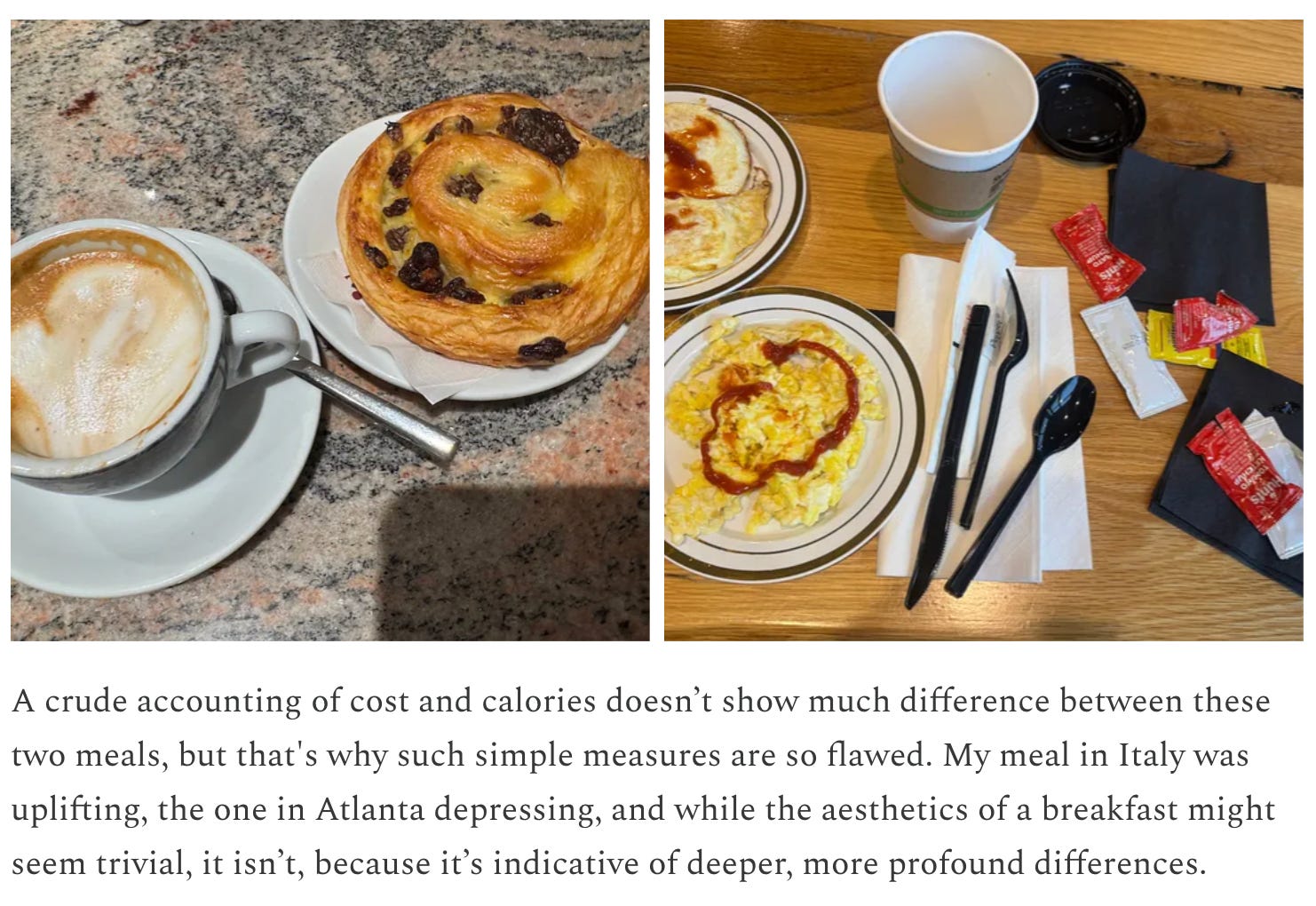
In the economic development discussion we rarely talk about the balance of maximum growth vs. maximum wellness, because the latter is much harder to measure. It really may be that simple - that growth curves have a hard time with such soft things. When we solve Maslow’s and then start to think about how we want to live, and if we’re happy here, academic measures of any kind struggle, as Taleb pointed out recently on Substack.
China is growing fast because many still lack basics like a car, while Europe and the U.S. have reached saturation, with little incentive for further growth. And many are discovering that lifestyle improvements, such as bicycling paths and pedestrian…friendly cities, may not produce economic growth. - Taleb

Growth can certainly be good, has been good, engineering is amazing, and we are capable of remarkable things as a species. We are builders, and we build even if we don’t exactly know why we’re building it or what it is we’re really building (ahem - AI). At the moment it’s Bigness all the way down and we’re due for a renewed sense of a localism to balance the scales2.
The point is that we seem to have created a system that can’t survive unless it grows and the only way for it to grow is to add more people to it, that can then in turn increase productivity. You can either have more people to do the work that needs doing (population gains), or the people can get that much better at doing it (productivity gains).
Again, this says nothing about quality of life, building healthy families, maximizing community wellness, or anything about sustainability, but it is the foundation - the lifeblood -of the system we’ve built, for better or for worse.
The former, more people - more life - is a wonderful thing, but many of the world’s cultures can’t seem to manage it on their own at the moment. When 2.0 people have less than 2.1 children, the population is in decline. Science develops technologies like IVF on the one hand, and governments issue immigration programs on the other, to try and patch the leaking vessel.
We have become the global Seeker Species - peoples from all corners of the world move to and fro, seeking opportunity that they know exists somewhere even if it isn’t here. Pulled by the glimmer of hope and prosperity or pushed by circumstances that make staying in their homeland too difficult.
Here is a birthrate chart of some of the world’s major European nations.


And here’s the world at large.
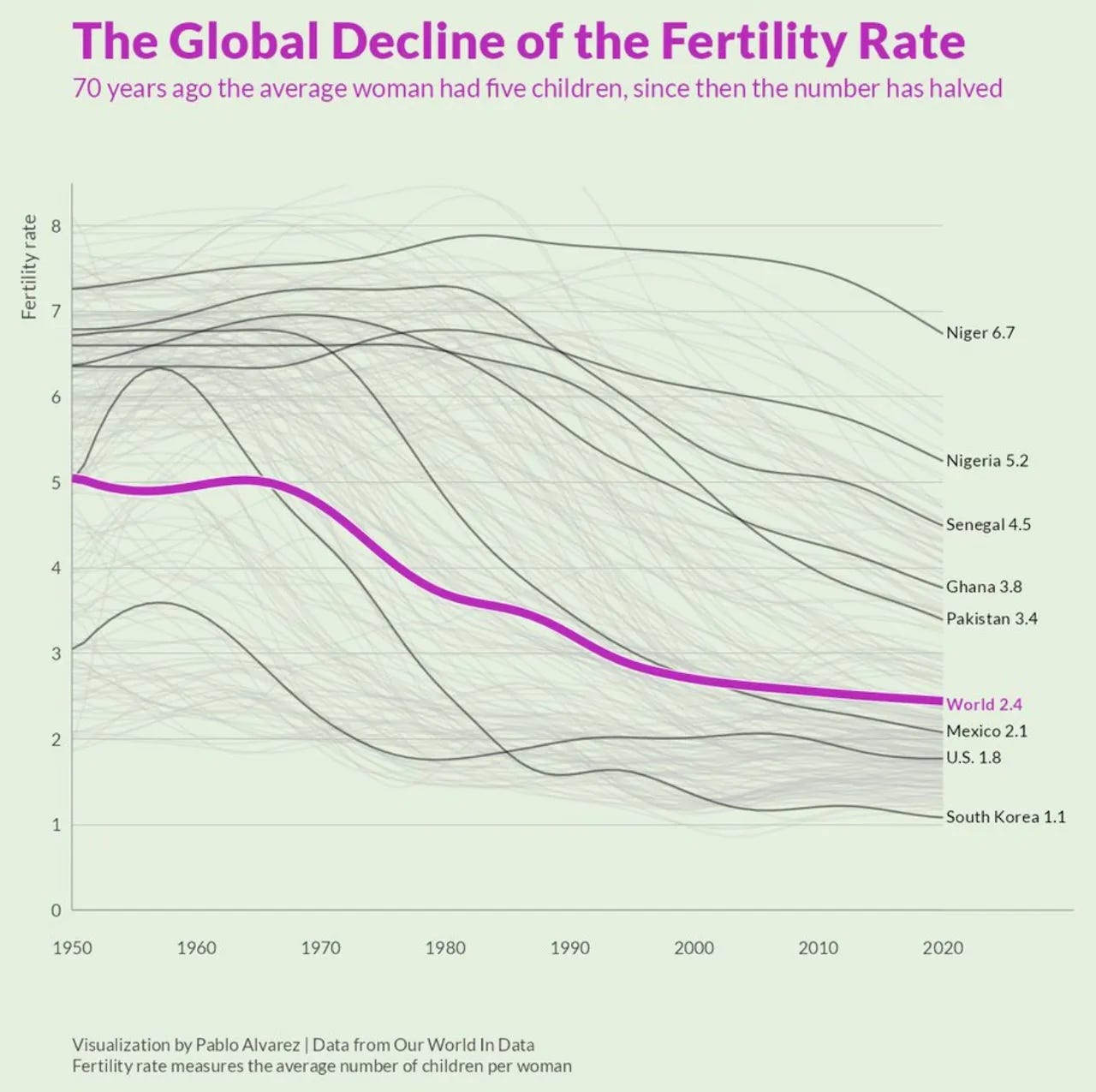
Once you see the predicament we’re in here, you can’t unsee it.
Birthrate and borders - two issues - maybe the issues - that will define our times.
The Macro 🌎
What’s happening in the world at large?
Dwarkesh does it again / Ada Palmer on why the Renaissance needed Italy (but the Industrial Revolution didn’t - or couldn’t?)
Ray Dalio on The Straight of Hormuz / An interesting take on the perceptions and possible outcomes of the conflict and it’s relation to the Big Cycle
Jon Haidt on Australia’s take on youth mental health / Hint: they chose to prioritize their young > the interests of the social media companies
Joe Pompliano on how Norway is building an endurance sport juggernaut / And the reasons why are delightfully Scandi-practical (hello Asbjorn!)
Kevin Kelly on the miracle of travel / Why global travel is essential for long-term optimism
Phnom Penh, Immigration, and the Times We Live In
What strikes you first about Sub-Saharan Africa is how young and vibrant it is. Children - so many children - with big beautiful smiles, up early with the morning light, and in the community late into the evening. Being surrounded by young people is first and foremost, hopeful. Knowing that making more life is some kind of obvious good is optimistic in and of itself.


In fact, how many kids we have might be the modern temperature gauge for optimism and health in a population. If you believe, fundamentally, that the future is good, then you make things and you make life. If you believe that the future will not be good - if you’re fatalistic and pessimistic - then you don’t make things, because what’s the point.
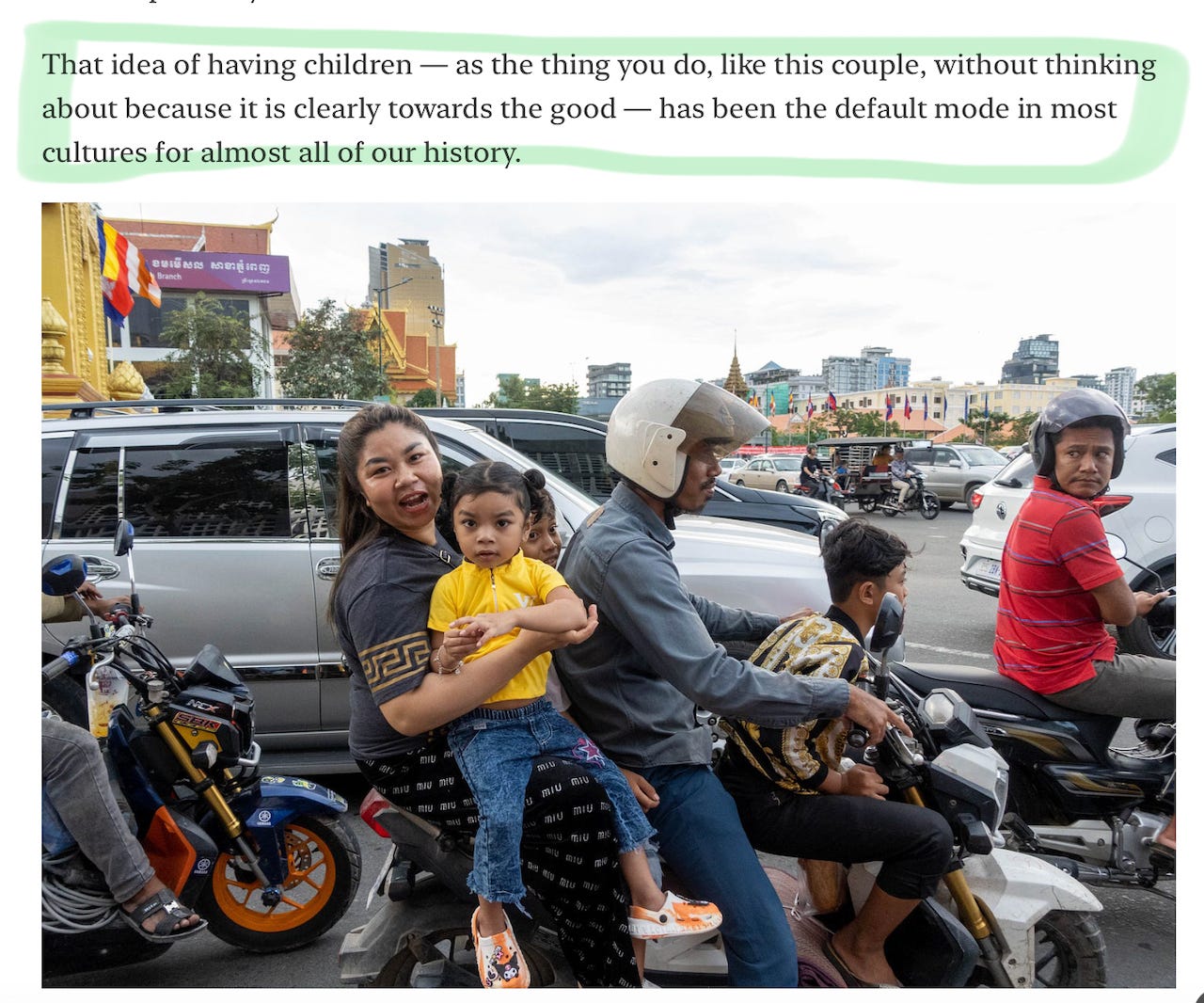
Chris Arnade, walking Phnom Penh, points out that this making-life-is-good thing was the default mode of our species from the word go.
This youthful exuberance of young countries is often juxtaposed with a strong sense of elder care and respect. East Africa is most assuredly not obsessed with the opinions of the young, as many rich countries now seem to be. Children are given responsibility and the chance to prove themselves early and often but there is also a clear sense of the young being embedded into a system of which they are not the center.
There is a process of growing up that has steps, and steps are not to be skipped. Discipline can be doled out by any adult within range and the old are owed respect because they have life’s battle scars, seen as the only path to real wisdom. Elders speak first, elders sit and you stand, elders decide and you obey (reluctantly or not), elders teach and you learn, and the elders set the policies and social frameworks for the community3.
I’ve long fantasized about having a chart that plotted birthrate vs. the level of respect for elders within a society, and I can’t help but imagine that the lines would run parallel. I don’t know what to make of this, but I’ve been thinking about it for some time now.
What exactly it is I can’t say, but societies with low birth rates feel empty, vapid, and lost, like there is a giant void lurking beneath, waiting to consume everyone and everything, while those with high child births feel more fulfilled, solid, and whole, especially when you adjust for economic success. - Arnade
The birthrate problem has many layers and we’re trying to solve it in a handful of different ways. The most obvious problem, at it’s core, is that a people, in a place, will cease to exist if the population crisis becomes severe enough, and it actually wouldn’t take very long for that to happen.


It’s the rate of the problem that has taken even the world’s seemingly advanced societies by surprise. The Chinese would likely never have implemented the now famous One Child Policy if they had any idea of how fast the birthrate crisis would come to South-East Asia. At least that is what game theory suggests - that the world could not have conceived (pun intended) how fast the birthrate crisis would unfold and we’re struggling to deal with that materially, from a policy perspective, and spiritually4.

The birthrate issue seems to be Priority #2 socially and politically - probably because it’s the harder nut to crack. What is actually happening here? What is happening to us? It is some combination of the world we’ve built physically (urbanization), our health (yikes), and our culture (socially we’re in delayed development for nearly everything, we maximize individual goals over collective goals, and so we have families later in life). We will come back to this later.
Political Priority #1 seems to be solving the problem with our borders - and that comes with 3 fundamental questions (and likely several others that I’m missing):
What we do
Why we do it
What the outcomes are
We’ve already dealt with why we do it - because we’ve created a system that has to grow to sustain itself, and population growth is the base of the modern economic development pyramid. Attend a public presentation of this king and what you’ll hear is that we’re growing the population via immigration because ‘we have to…’ Consistent with Taleb’s point that hyper-diversity is never done only for the sake of doing it.
There has never been a society that welcomed immigration for its own sake, for reasons beyond its economic utility. - Taleb
What we do is the implementation of immigration programs that are some (hopefully thoughtful) combination of attracting professional talent that can contribute to our productivity, onboarding temporary workers to do core, seasonal work that needs doing, attracting students to come and study at our universities and colleges, or serving the humanitarian needs of the world’s refugee populations.
What happens when we do it is the crux of it all and there are several things that can happen if these programs are not implemented in a thoughtful, reasonable way, with steady growth over time.
The latter is important because any radical immigration program, followed by sharp cuts can only be inflationary because there would be an obvious shift downward in productivity (businesses closing, etc.) - something happening in real time in places like Atlantic Canada. On the way up, you get a shortage of housing and long wait times in hospitals, and on the way down you get inflation, so it seems important to have a steady political hand and stay balanced.
Immigration done well certainly does add to the vitality and the productivity of a place. More people doing the work that needs doing, more young families buying homes, new business creation, and more students in schools learning how to be productive in the 21st-century are all great things. The ever practical Tyler Cowen offers a measure for anyone who thinks immigration is everywhere and always negative - housing prices! If the cities we live in are growing, becoming more dynamic, with increasing land and housing value over time, then Cowen thinks that ought to be good for us.
As practical as measures like housing prices are, it still doesn’t say anything about quality of life or the social fabric that holds us all together in a place. Surely we also need to recognize that, over time, high levels of immigration will change the fabric of a place completely. With some good elbow grease, patience, a commitment to being welcoming, and a cultural story that we can all buy and work toward, we can have a wonderfully productive diversity. But if we don’t accept the hard work that comes with it, and do what is necessary to make it sustainable, nobody is happy.
The Great Control Trial
The world itself acts as some kind of miraculous control trial because human cultures are so radically different, but we’re all the same species. If we want to study vaccines and their benefits and risks, we can study the now hyper-vaccinated societies of the classically ‘university educated’ and ‘rich,’ and then also study the Amish (who I am deeply fascinated by and whose cultural motto seems to be leave me bloody-well alone and I’ll be the best neighbour you’ll ever have).
If you want to study nutrition you can study the Blue Zones at the extremes, and every average in-between. If you want to study the culture of work and productivity, we can study China’s 9-9-6 and Costa Rica’s Pura Vida.
We can do this in immigration too. Some cultures - like the Japanese - have chosen not to go down this road until very recently. Others have chosen to pursue hyper-diversity without considering if it could present social and economic risks and where even asking the question is seen as some kind of xenophobia. And some countries are more balanced and in the middle - working hard to ensure there is a national and cultural story that stays in tact while still presenting itself as a land of opportunity.
Many of my local friends are surprised when I suggest that the Americans have actually done quite a good job at this from a long-term perspective (I can feel the arrows being slowly removed from their quivers). We can see this in the available global data. Imagine a map by which the size of arrows to and from a place represent the levels of leaving and coming to a place. It’s big-fat-arrows across the board to the United States.
This is clearly not because of any one government administration - it is because of an idea. In this case, an idea that has several names - the American Dream, the Land of Opportunity, the Ivy League. Different names, one central idea - that if you’re willing to work hard and get with the program, this is the place for you to succeed. And it turns out that for a large number of people - it works! I am certainly sympathetic to how often it doesn’t, and the fact that this may be in jeopardy right now - but the idea is what sticks in the minds of much of the world’s citizens.
New York City is the perfect example. NYC is the world in miniature, and the fact that it works so well seems almost impossible. To have invited the world, inspired the world, and raised the world, while creating one of the world’s most recognizable brands can only be possible if those that are there are proud first and foremost to live daily life as New Yorkers.
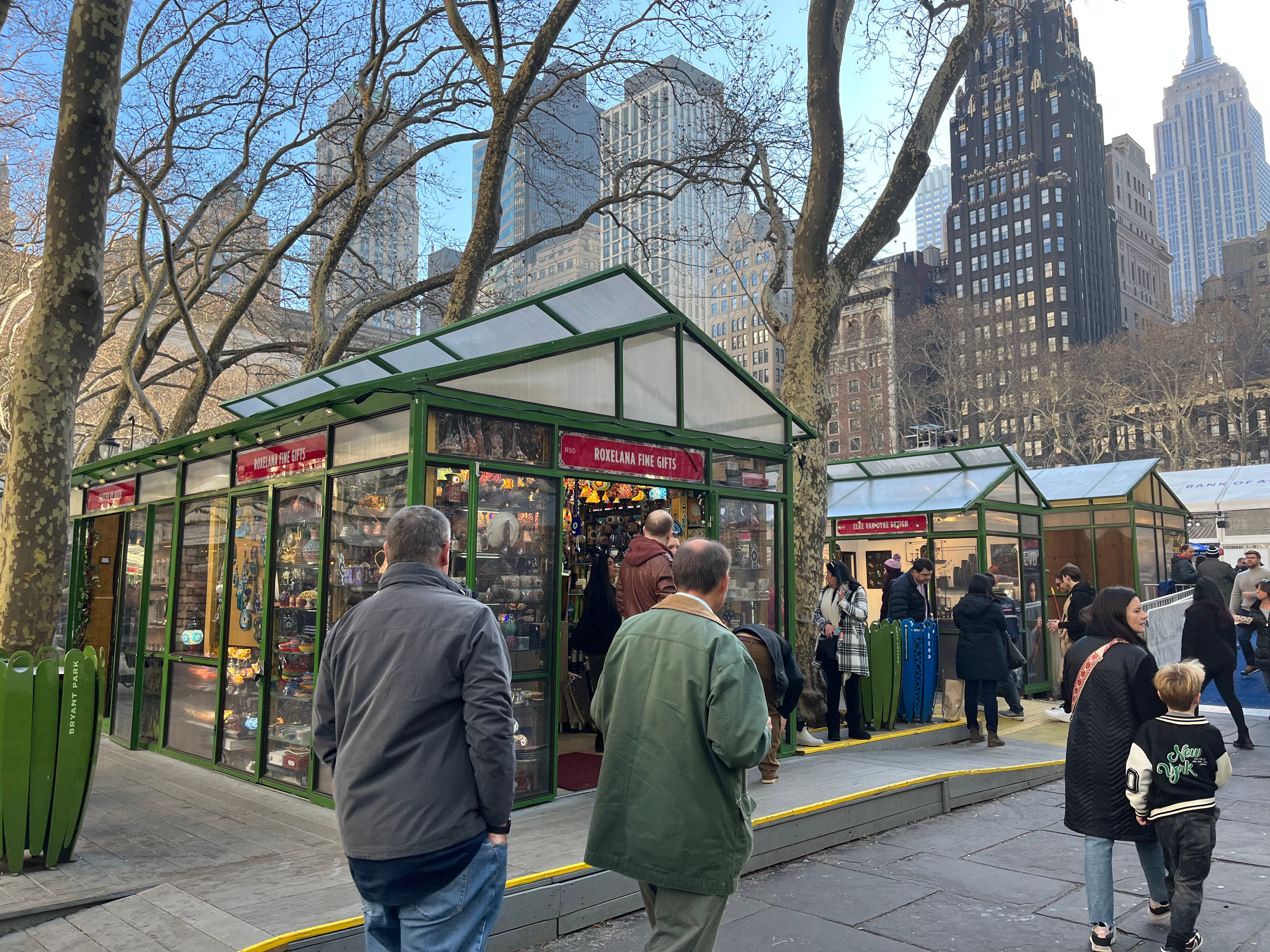
The point here (at least a point) is that we need cultural stories to idolize and pursue - human beings need a story.
Birthrate and borders will be two defining chapters in our 21st-century story.
Don’t just respect others: offer them a common struggle, since our problems today are common; propose and fight for a positive universal project shared by all participants. - Zizek (with an interesting footnote on Tibet if you read the book)
The Tool(s) 🧰
So what do we do about all of this?
My first caveat is that I think it’s likely that most people reading Issue #53 are not policy makers or directly involved in trying to solve the birthrate and borders story. But I would bet my lunch money that everyone reading this has felt it, in some way, at the personal level. So let’s focus on what we can do as individuals to work toward a collective outcome we can all be proud of and work toward.
The first I think, in a surprise twist, is to pursue your own story. Happy, healthy, squared away people make happy, healthy, prosperous places, and we need all hands on deck right now. I asked one of my brightest friends what would happen if I ran a political campaign based on the premise of personal discipline and responsibility, and I can still hear his laughter. I can’t help but still think it is important, and if you feel like you need to start walking that road yourself, you can start here and here.
The second is to engage with your immediate community in trying achieve it’s full potential - the very definition of modern economic development. Do something at the micro, like introduce yourself to your neighbours to build rapport, and do something at the macro, like volunteer to sit on a committee doing something you think should be done. You don’t need to be one of the socialites on the black-tie circuit, you don’t need to share everything you’re doing, and you don’t need to do it only to pad your resume. You can just do it because it ought to be done.
I don’t want this point to come off as naive. Slavoj Zizek would certainly caution me on it, because it’s much harder than we think it is to build meaningful rapport.
Easy to say, difficult to do. - Zizek
The third, the far more intimidating of the trinity, is to have the audacity to know what you think and have the confidence and integrity to talk about those things with grace, patience, and compassion. You don’t need 1000 Christmas cards. It’s okay to respectfully ruffle feathers. You need not silence yourself because we are in a time of extremism. If it matters, say it with confidence, clarity, and compassion.
Never stop asking questions. Never stop being curious. Never remove yourself from your fellows humans.
You’ll be fine. 🤝
—
All we need is a point of view, a set of tools, and a lot of time.
See you on the road.

I do think this particular trend is reversing - but that’s only because, on average, we’re getting peak rich and so all wealth accumulation above the peak starts to feel hollow, and growth for growth’s sake slows down.
Interestingly, this seems to already be happening in China - the country we perceive as perhaps the most accelerationist of all.
It won’t surprise you to learn that I believe this is for the good. Youth is your chance to test the extremes, acquire skills, discover your passion, work hard, get mentors, and learn. There is nothing about the life of a young person that makes them capable of leading, and I say this as someone who believed he was ready far before he actually was. This was met with a wonderful piece of advice from a then boss, now friend, that was something to the effect of - you have all the conviction in the world, but no credibility - work at getting more of the latter. This is very good advice if we are humble enough to receive it.
The latter point won’t get much airtime in our culture, but it cannot be underestimated. It’s the thing we feel, but don’t know why or what we feel, when we see the death of small towns. We can imagine what it would be like for us to die individually, but we can’t imagine what it would be like for us to die collectively.