



Good morning People & Placers!
I was sitting in my adopted local, Comella Caffe, scheming on how to appropriately ask to take an old man’s portrait1, when I got word that a true craftsman was leaving our home in the Maritime provinces for Montreal.
It made all the sense in the world - the man of craft in question is French (Vive la France!), a lover of people, and a true individual. These people are in high demand on Main Street because they make a place dynamic, and people want to live in dynamic places. What makes places worth living is an important question in our times.
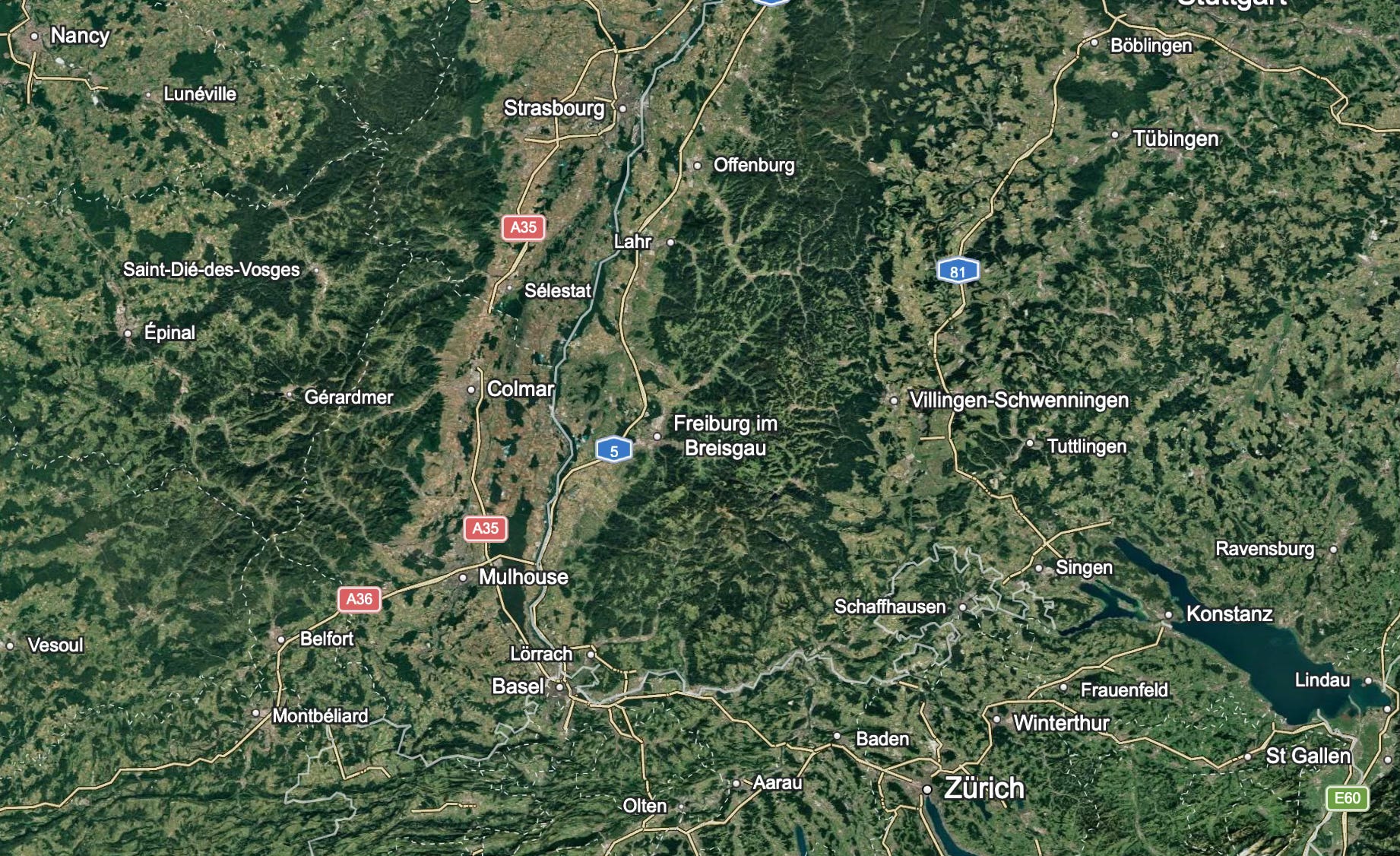
The man is from Strasbourg, a stone’s throw from the Rhine that separates France to the West, and Germany to the East. Go South a ways, and that same river cuts the pie into 3 pieces, splitting France, Germany, and Switzerland, at Basel. I say this to tell you this is a man of culture - we all are whether we know it or not - and to me Montreal fits him like a glove.
There are a few messages here that resonate with me, and if I’m honest, make me rather teary eyed - in a happy way - although as of late I have the male curse of choking it back instead of letting it happen, and that can’t be good for my health. I’m working on it.
The first is that the question of people and place matters, and it matters even more in the birthrate and borders era. Certain people are free to move around the world as they please at this point - if they have the gumption - and craftspeople are one of those groups. Why do they choose a place, and how does a place choose them?
The second is that the Atlantic provinces of Canada are not for everyone - even though it looks like it might be, because every photo of it shows you what it looks like, at a maximum, 50 days a year. Those 50 days are remarkable in a way that few understand unless you’ve experienced them, but they are quickly met with grey, and cold, an economy that has struggled, and a social life that feels hard to do well compared to outdoor cultures in temperate climates. This is not a bad thing! It simply means that choosing a place to live, even if it’s the one you come from, is a choice and people make that choice because of specific things about themselves, and about the place.
The third is that craft matters. I’ve beaten this drum to a pulp, and I will likely continue to do so, because dynamism at the macro and the micro (you need cafes as much as you need big IT companies) is what makes a place livable and what makes a culture. I believe that so much that I spend all of my working days in entrepreneurship and economic development, and I will likely continue to do so.
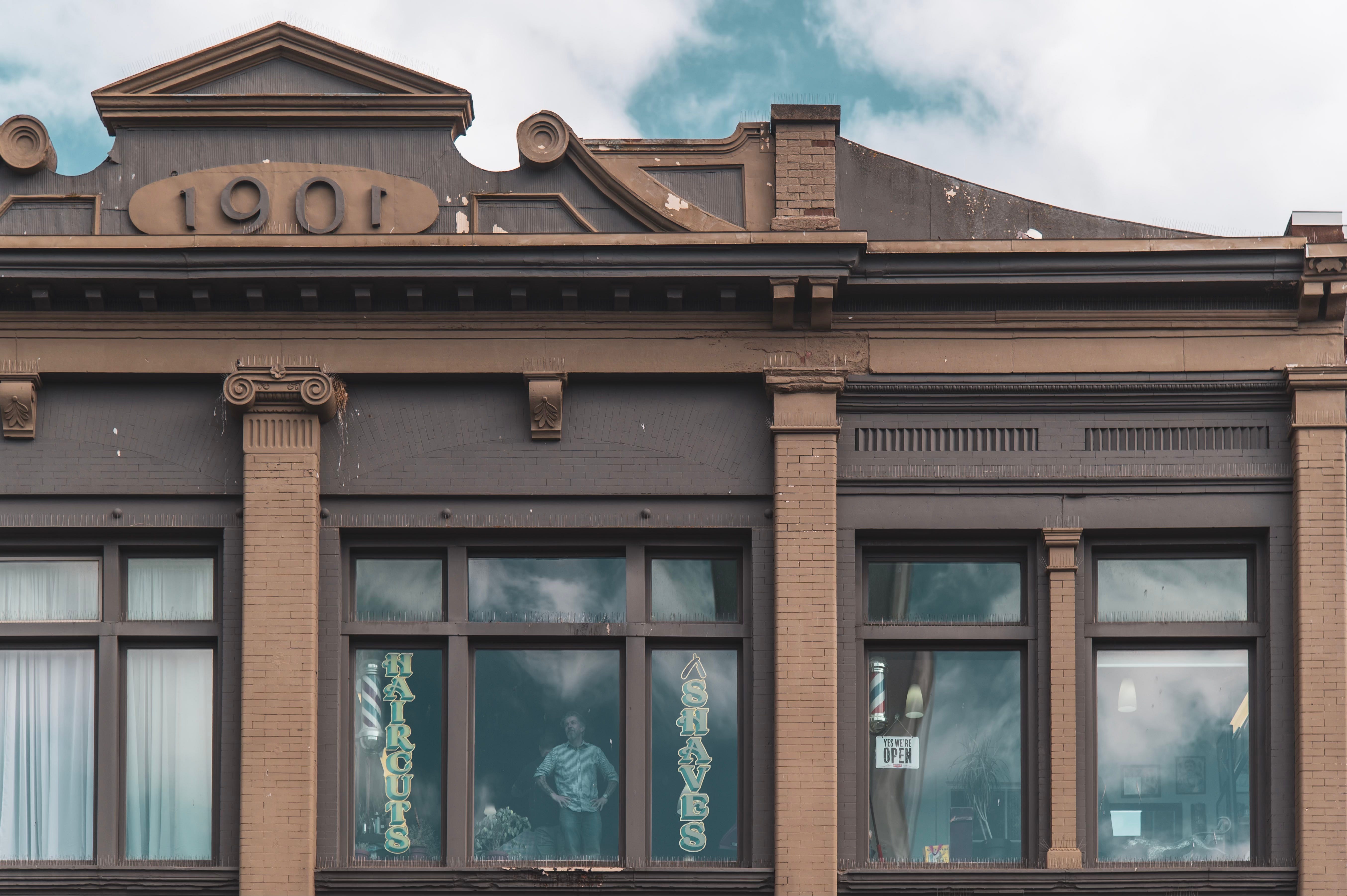
Pat Chnapz came to us from France, having honed his craft in Strasbourg, as an immigrant who needed to challenge his barber’s license in his new home in bilingual Canada. He was a ‘student’ only in name, although his humility would lead you to believe he’s only scratching the surface of what’s possible in his craft.
After successfully challenging his license he was quickly snapped up by one of the best barbershops in our province and spent a good, productive, wonderful 7 years there, before making the decision he is making now for himself, his lovely wife, and his craft.
I had the good fortune to sit in Pat’s chair often, and I loved it so much that my collaborator Mark Hemmings and I talked the editors of The Maritime EDIT into a full profile on Pat, his history, his life, and his work. I was surprised he said yes, but I knew he trusted me to do it right, and I knew that when I sat in Pat’s chair, he knew that I loved being there for the simple reason that he is a true craftsman.
Pat’s work matters to him and it matters to him in a way that is wholly unpretentious. It matters because it ought to matter. We ought to do things in life because that’s the way things should be done. A personal and professional ethic that extends far beyond ourselves, into something that feels much more like service to the whole. We are a group oriented species, we come from a place, we are of a people, and we have to accept that fact and be as productive as possible within that group2.
If you’ll tolerate a personal anecdote that borders on the selfish, it’s the reason why (as many of you have noticed) I’ve added my full given name to my social platforms. My mother named me Matthew George Martin, after my late grandfather, and namesake, George Martin. Over the years, and in earnest after he died, I became mostly known by my short-hand - Matt George - a designation that I wear as a badge of honour. But I am from a people - the Martins - and I need to understand that, love that, and share that. We all have a history, we all come from a place, and we are of a people. To know it is for the good.
If anyone taught me that a personal ethic matters more because of transcendent reasons (because things have to matter) rather than utilitarian (because it makes you good at your job) it was George Martin, and I’m proud to be named Matt George Martin. Pat understands that in a way that few people do, and spending time with him, in and out of the shop, was a pleasure and an honour every time.
And so, as he makes his way West, to the great province of Quebec, to one of our truly great cities, I offer you a re-print of what first appeared in Issue 23 of The Maritime EDIT - In Pat’s Chair. I’ve copied the text below (with no edits or additions even though I desperately wish I could) with a photo gallery of Mark’s great work. I can’t belabour the point above enough - every time I write and publish something I immediately wish I could have done it 15% better, and that is the curse of the publisher.
Please enjoy, please follow Pat’s journey, and if you’re so inclined, watch the short interview we ran with Pat in his shop to get to know the man personally.
Please enjoy!
In Pat’s Chair
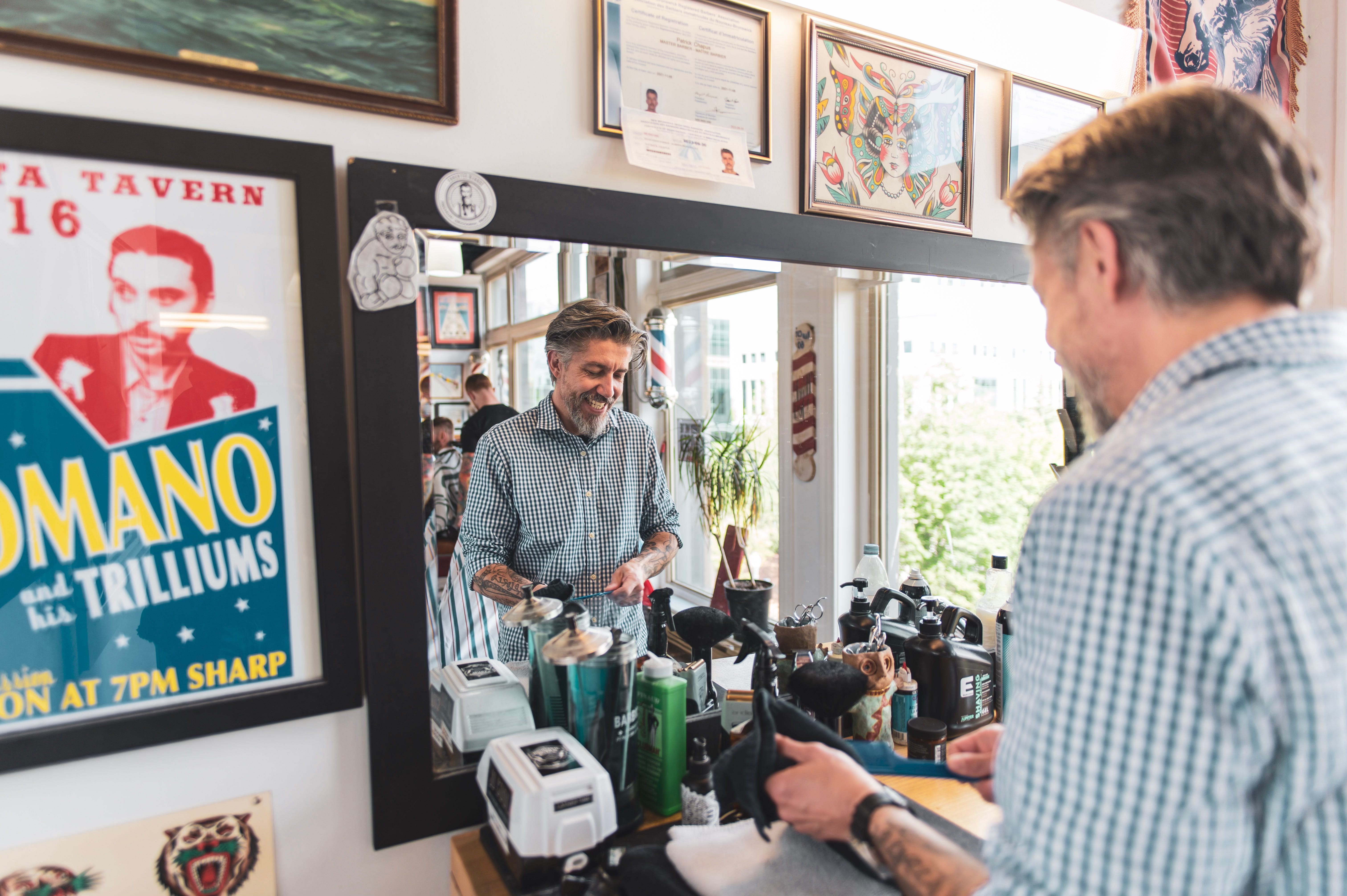
In Pat’s chair, there isn’t anything particularly surprising. In fact, there might not be a single thing you wouldn’t expect. Nothing out of place and yet nothing remarkable either. There are quality products that line the mirror. Famous names like Reuzel, Pinaud and Andis. The chair itself, although a beautiful vintage, appears to be entirely in its correct place. Its headrest, at the perfect angle for a hot-towel shave, has specks of rust and is inscribed with flowers, just like the right arm of the man who positions it.
Nothing about the tucked-away corner, on a third-floor walk-up, on Main Street in Moncton, New Brunswick, is particularly special. What is special is the man who occupies it.
Before returning to that corner in that third-floor walk-up, we need first to visit a small cabin on the outskirts of Helsinki, Finland, and follow our lead to one, seemingly irrelevant, square block in the middle of Queens,New York.
Ashprihanal Aalto is an enigma. Terminally unique. The kind of person we only meet once, if we’re lucky enough to meet one of them at all. These people are, by definition of their action, singular in some way. When we lose them, that thing is just gone. I’m attracted to these people like bees to a bright-purple coneflower.
If you pass Ashprihanal in the street, you can be forgiven for missing him entirely. Short. Calm. Discreet. Working as a mailman in the cold winters of Finland can be lonely business. The sun rises late and sets early, as Ashprihanal diligently and methodically delivers the post around Helsinki.
When the deed is done, Ashprihanal returns to his small, isolated cabin, which appears to have abandoned anything that would even hint at excess. It doesn’t even seem to have electric power, save one or two lights. Ashprihanal sits by a small propane stove, cooking a hot pot of noodles as he prepares for his nightly ritual: sitting in meditation at the Helsinki Sri Chinmoy Meditation Centre.
On a lone stool across from his single cot is an old image of one man, his mentor and spiritual teacher, Sri Chinmoy. Although we may miss him in the street or pass by the unassuming cabin where he spends his time in relative solitude, he is undeniable in his craft. Ashprihanal Aalto may be the greatest long-distance runner that no one has ever heard of.
Ashprihanal diligently delivering Helsinki’s post, only to return to his single-room cabin on the outskirts of town to meditate, is the conscious design of a simple life. A life of dedication to craft and to an exploration of the mind and body. He carefully saves his money to leave Helsinki a couple of times every year to run some of the world’s most fascinating long-distance-running races. The most fascinating of which is the Self-Transcendence 3100.
In the middle of the bustling borough of Queens, New York, there sits a perfectly unassuming square block. At its perimeter, 0.56 miles exactly, the block is as unassuming, paradoxically, as Ashprihanal himself, its character made such by unremarkable office buildings, ice-cream trucks and a popular handball court, surrounded by a rough chain-link fence. This block, particularly because it is so unremarkable, makes it exactly the right stage for something remarkable: the Self-Transcendence 3100 Mile Race, the longest certified road race on Earth.
Each summer, the world’s wonderful weirdos of long-distance running gather to attempt to run 3,100 miles around this single, meaningless square block. For you math aficionados, that’s 59 miles a day for 52 days, if you run it straight. The race was conceived by Ashprihanal’s spiritual teacher, Sri Chinmoy, an athlete in his own right and the man who gave Ashprihanal his name. Aalto was born Pekka Aalto but received the name “Ashprihanal,”or “fire inside the heart,”during his first 700-mile race because of his, almost literally, unique ability to go inward and overcome.
The location of the race feels somehow intentional. It isn’t the famous Moab 240. It isn’t the famous marathon streets of Boston. It isn’t an Olympic stadium, and there isn’t gunfire at the opening. There isn’t a wreath, fame or glory for the winner, and not one of the runners will ever have a major brand deal. It is the literal and figurative antithesis of fame, and it is here that Ashprihanal stands alone, as the greatest 3100 runner in history, having won the race nine times.
There is a singular pursuit in the Self-Transcendence 3100 Mile Race: intense personal suffering, the pursuit of more, and absolute, commitment to craft. The point is to not be celebrated. The point is to go inward and find something more. The point is full commitment and the pursuit of excellence, without concern for titles, glory or recognition.
Filmmaker Sanjay Rawal made a beautiful documentary about the 3100 that I’ve watched start to finish nearly a dozen times. I was entirely captivated. I was spellbound. I was deeply confused and, for reasons that later became obvious, moved to tears more than once. I had to know about these people. I had to know what pushed them for more. To find something within themselves they didn’t know existed. I wanted to explore true craft. Something that, above all else, you must do. I had half a mind to drop everything and go to New York City. I would take the train from Rhinecliff, ramble in through the Bronx, then Harlem, then eventually to Queens, where I would… what? I had no clue. There was nothing there for me.
I realized later through my writing that what I was searching for was a feeling. I wanted to stand at the chain-link fence surrounding the southern half of the 3100 block and just be. I wanted to feel Juri, the Ukrainian, running the 3100 as a way to mourn the war that had taken the lives of so many of his people. I wanted to feel what Shamita Achenbach-König felt. The Austrian musician who attempted the 3100 in its 20th year. I wanted to feel Vasu Duzhiy, who spent two weeks running with blisters before his feet calloused over.
What I realized later about Ashprihanal is that he is aman out of his own time. He doesn’t quite fit somehow. There is an aesthetic, a gleam in the eye, a subtle smirk that suggests he knows it as well as I do. As fate would have it, I found such a man. He happens to be the one perched in the corner of that third-floor walk-up in Moncton.
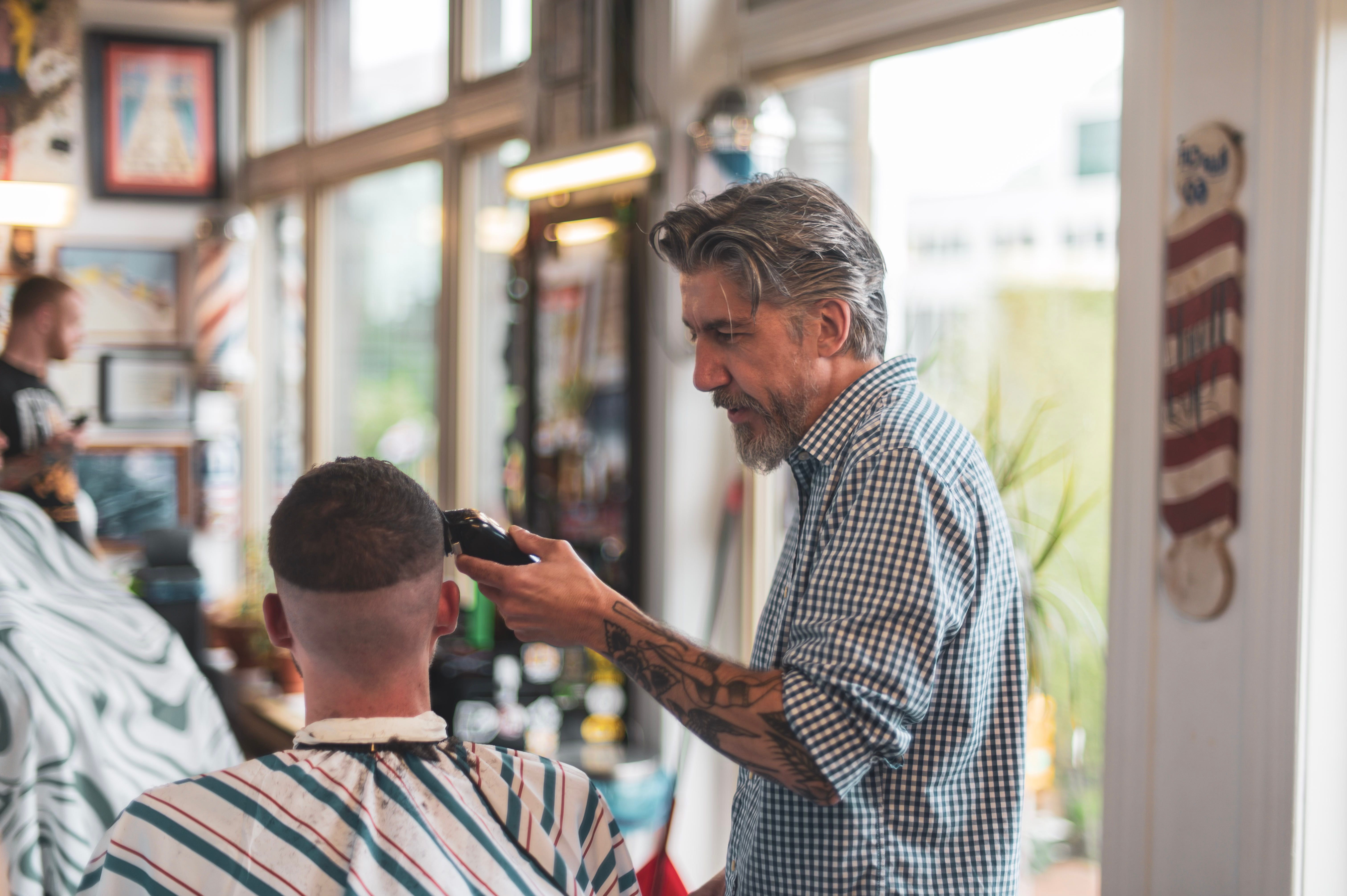
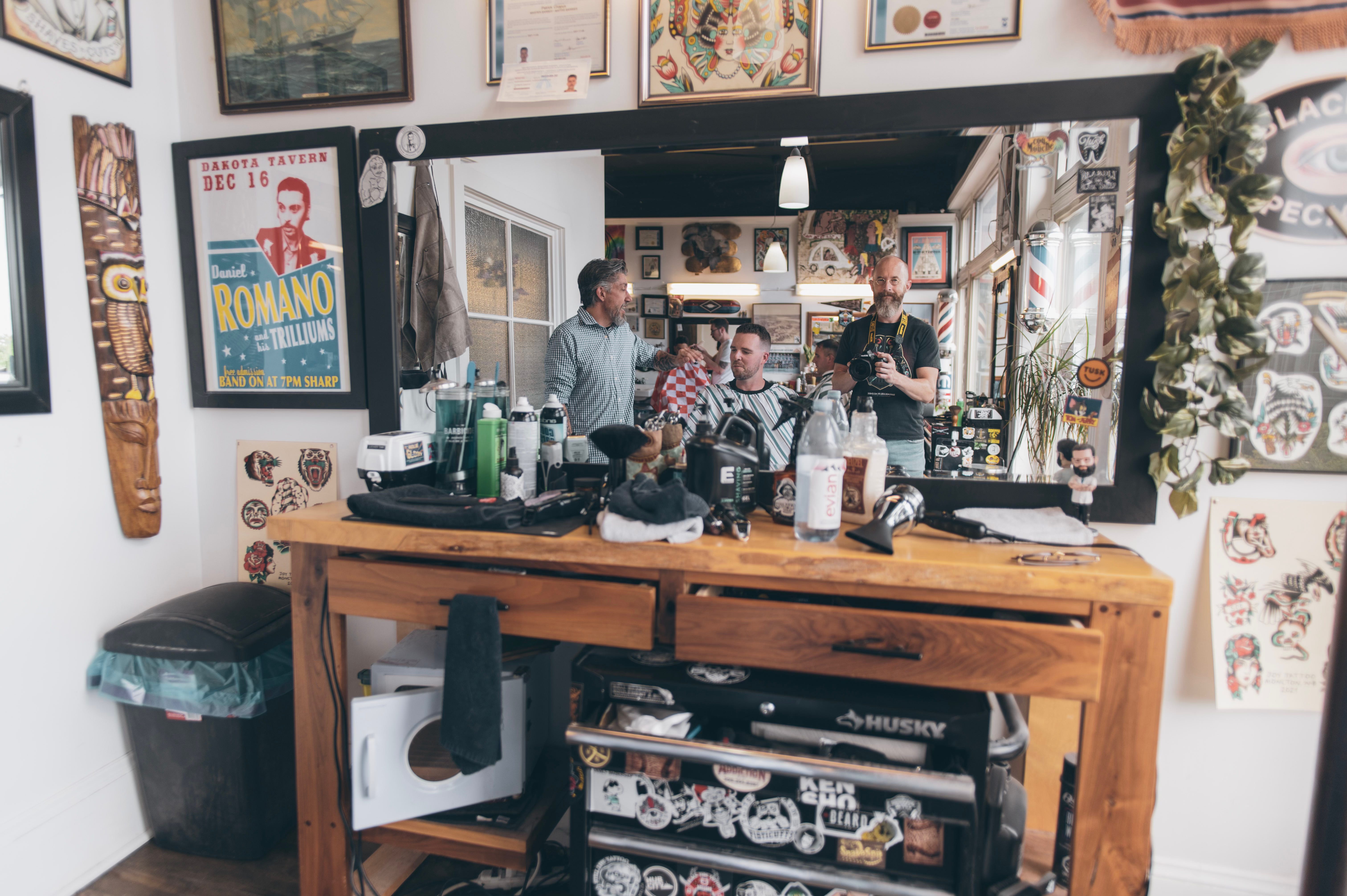
Standing behind that old-school barber’s chair is a true craftsman. The kind of person who is, in some way, singular. Like Anthony Bourdain, Christopher Hitchens, Ashprihanal Aalto, and Joan Didion before him, there is only one Pat Chnapz.
The rest of our story is entrenched with culture, cloaked as an exploration of true craftsmanship. It takes us first to a small cabin in the French Alps, then to Paris, and then, somehow, to New Brunswick, on Canada’s Atlantic coast.
World War II was a deep global scar. Pat’s grandfather had served in the war and the question of what to do next loomed over the men and women who served to defeat Hitler’s Germany. Returning home from war. What a question. What a conundrum. Does life simply resume? Is there a wading-in period, or do you just get on with it? Perhaps that’s a question only the individual can answer.
For Pat’s grandfather and his close friends, returning home meant building a small cabin in the French Alps, at the foot of Mont Blanc, on the southeastern boundary that separates France and Italy. Maybe it was cathartic? That only somewhere as grand and awe-inspiring as the Alps could buffer war and the pursuit of a normal future for Europe — and for the small group of men who had built the cabin.
It was in this small cabin that Pat first picked up a razor blade. His grandfather, being a gruff, traditional man of old Europe, would shave his face clean each morning using a single-blade razor. An art that is by and large lost on us now. He would prepare the skin by making tight circles in a tin of soap with a shaving brush. After lathering the soap generously on his face and neck, he would use long, smooth strokes to shave clean. Perhaps an homage to his military days or simply a habit he never let go of. Men were certainly, in a given time and place, creatures of habit.
Something about the act and art of deftly using that blade caught Pat’s attention. Seeing that his young grandson was somehow taken by the single-blade razor, Pat’s grandfather hoisted him onto the table and taught him the process and the careful technique. There are certain things we don’t forget. His now world-class craft started in that chalet at the foot of Mont Blanc.
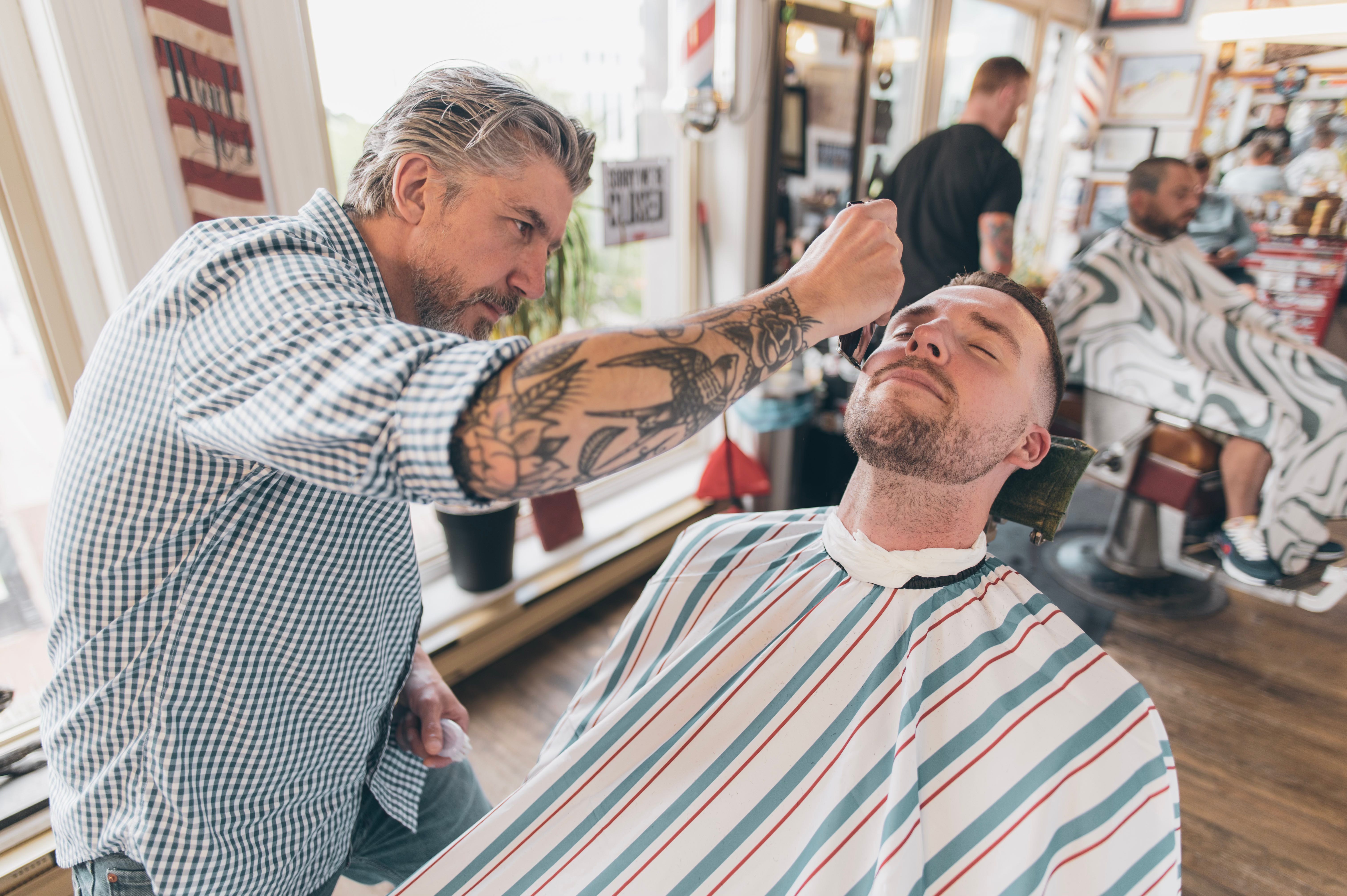
For most of us, at some point in life, we forget what inspired us as children. We forget the hours wasted away on nothing but creativity, craft and a burning desire to be engaged with the world. It’s what Robert Greene says brings us closer to a sense of “mastery.” We soak up new information like a sponge, and we use that information in ways most natural to us. When we connect the dots in reverse, we can point to transformational moments in history that changed our path entirely.
Now, looking back from his perch on Main Street in Moncton, with the benefit of time and success, Pat points to that moment, in that chalet, as a turning point. It would be years later before he embarked on a life of craft, centred around that same single-blade razor.
For Pat, the act of forgetting what drove us to create in childhood manifested into a career in medical-supply sales. First in the historic city of Strasbourg, near the German border, and then in Paris. He was diligently climbing the corporate ladder, earning a serious income and meeting serious people. He dressed, and looked the part, with impressive hair, a long, handsome face and a charming smile. For all intents and purposes, he looked exactly like someone you’d expect to lead a sales team.
But it wasn’t who he was. Pat is a craftsperson. The kind of craftsperson whose craft, on a long-enough time scale,is undeniable. The watershed moment was having to fire several members of his team during a challenging economic moment. He couldn’t stomach the thought.
Although he was indeed pushed away from a life on the corporate roundabout, he was equally pulled by the internal fire that all craftspeople feel. The pursuit of something more. The pursuit of creativity, excellence and expression. That thing that you simply have to do. The thing you can’t imagine not doing. It was then that Pat returned to what was always inside of him, the memory of that moment with his grandfather, at the foot of the Alps.
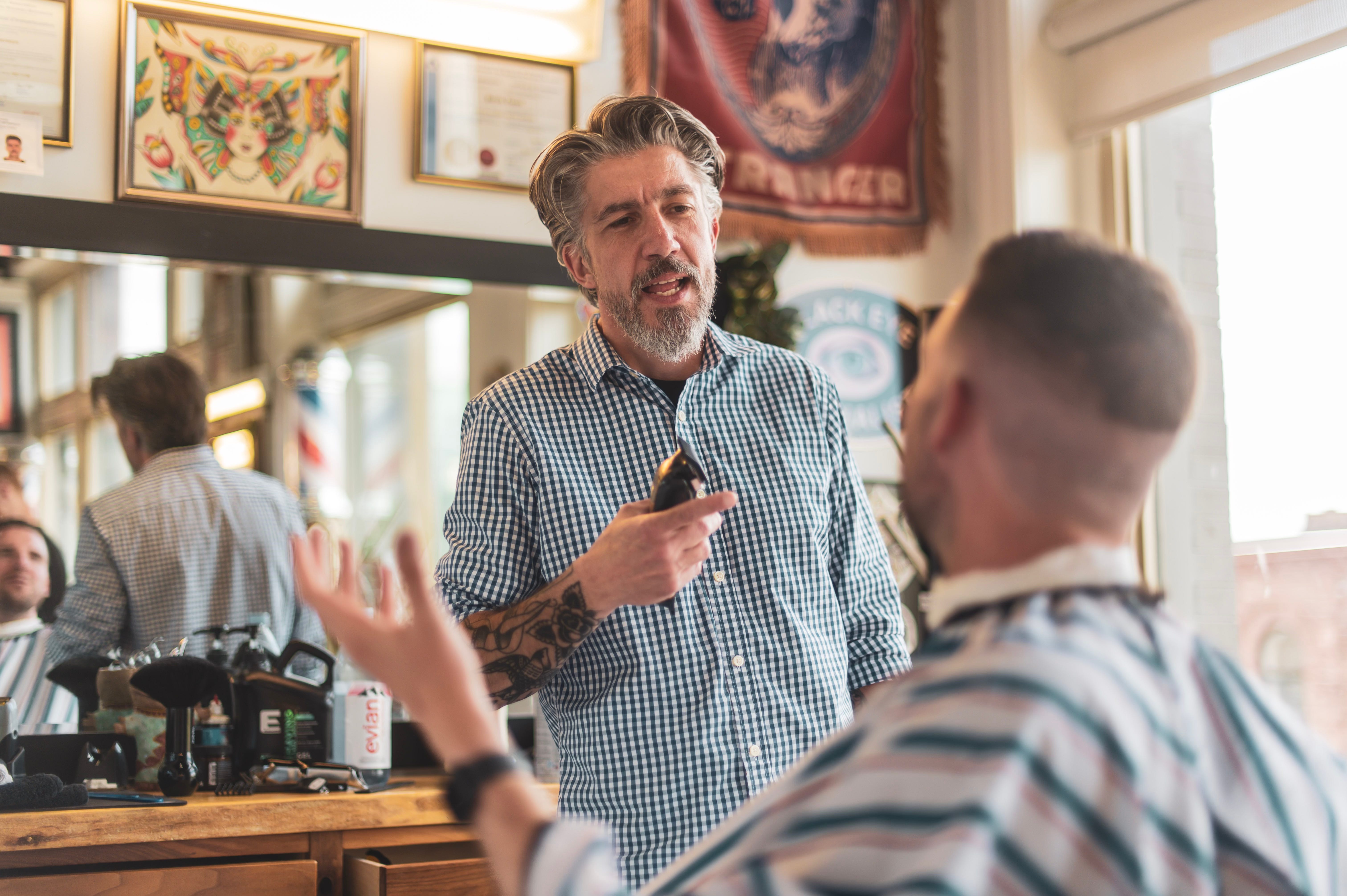
As Robert Greene would remind us, all masters must go through an apprenticeship. For Pat, that meant starting his journey to true craft as a hairdresser in the salons of his native Strasbourg. The kind of places that smell of rich fragrance, high society and high-end products. The kind of place where women of bourgeois France pay handsomely for quality and pampering. Where the agenda is the gossip of the day. Folks very much not on the margins of society.
Although his stint in the salons of Strasbourg was an intense apprenticeship, those trained classically, like Pat, often become the most well-rounded craftspeople. Understanding the entire gamut of technique, adapting his ability to whoever sat in his chair at any given time, incorporating the new and the old to create a style entirely his own. In this way, Pat learned the kind of mastery that only comes with a fundamental understanding of his tools.
Eric Clapton once said that John Mayer had “mastered” the guitar. He could do whatever he wanted with it. He was so proficient and so well trained that the guitar became an extension of himself. It was Mayer’s way of telling the world his story, in the same way that words were the tool of choice for Robert Greene, Joan Didion and Christopher Hitchens. In the same way that sushi is the tool for Jiro Ono, a shokunin in Japan. In the same way that Ashprihanal runs and in the same way that Laird Hamilton surfs.
After leaving behind his hairdressing career in the salons of Strasbourg, Pat’s story becomes, like so many in the 21st century, one of human movement. Pat and his wife were seeking change and adventure. When you meet them, it’s hard to imagine them wanting anything else.
Their destination? New Brunswick, Canada. First, to my hometown and the place that I first sat in Pat’s chair, then to Moncton, where I sit in it as often as I can.
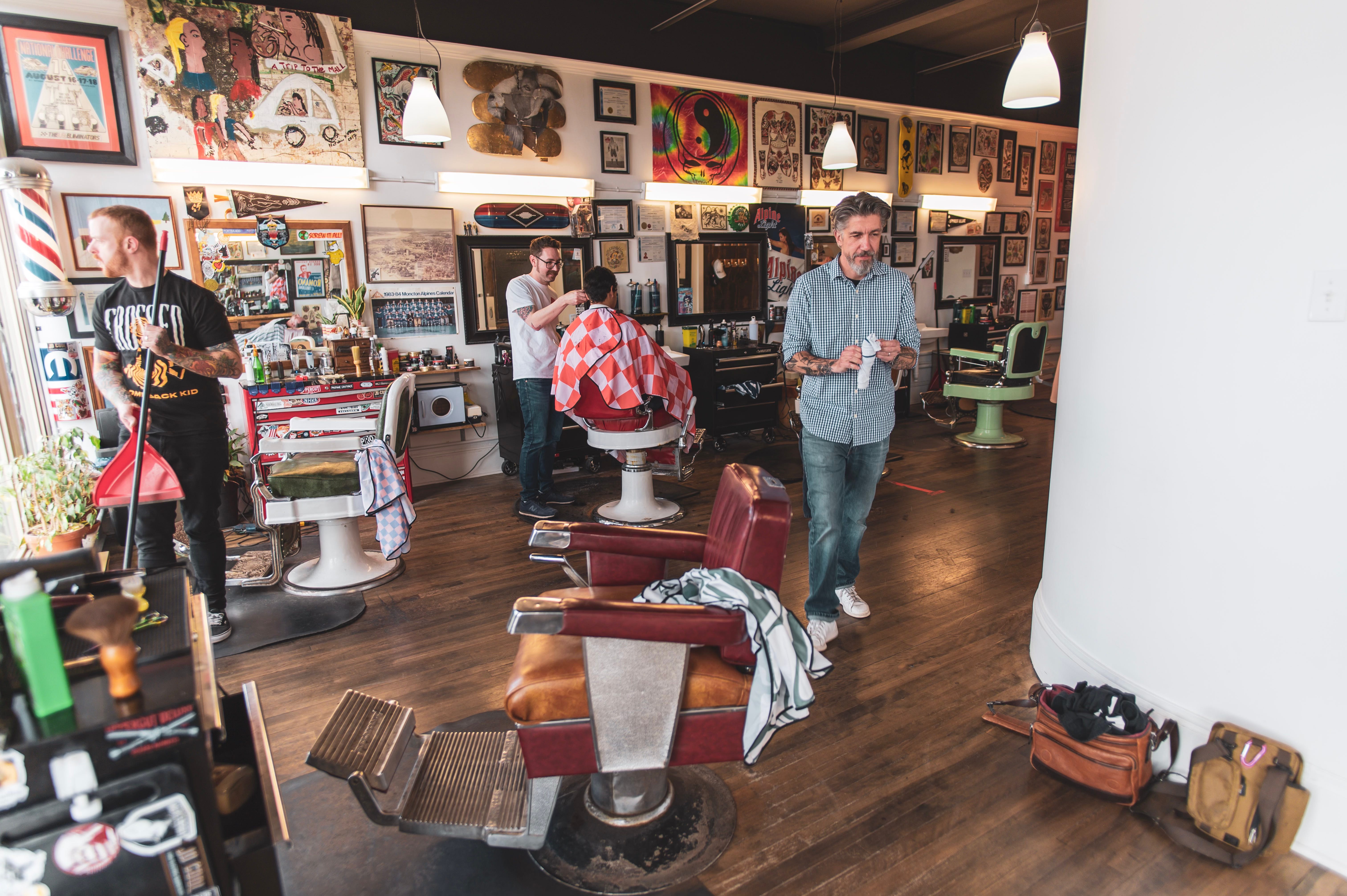
When you look at the worn wooden table at the foot of Pat’s mirror, there isn’t a tool or product he hasn’t mastered. His tools are an expression of himself. It’s how he shows love and how he takes care of his long roster of clients. Being truly excellent matters to Pat. It’s the kind of excellence that comes only from a deep love of a singular pursuit. I’ve simply never met anyone who cares as much about how I feel as Pat does. It’s the only thing that matters.
If you get the chance, I urge you not to miss the opportunity to sit in Pat’s chair.
—
All we need is a point of view, a set of tools, and a lot of time.
See you on the road.

More on this later because this particular gentleman turns out to be the owner, and founder, of Comella Caffe and The Garden Basket - the old, elegant, and routine oriented Jack Comella.

Interestingly, if you’ve been on the road as of late, it may have occurred to you that Western culture seems to have forgotten this at a head-spinning rate.
Love this! It was a very fun photo shoot . . . thanks for bringing this back Matt