


Good day People & Placers!
I hope this morning you are with your people, in your place, regardless of where in the world that is, and that you’re happy - doing your life’s work, which, by definition, will take your entire life. You might as well settle into it. Best not to rush, or be rushed. If you are one, or both, of the above, I can virtually guarantee you it’s the phone. It just is. I’m sorry to say it because we wish it wasn’t true, but it is true.
It’s so true, in fact, that it poses a critical question - what will become of us for it? How will the haves and the have nots find common ground? How will we build a unifying cultural story? How will we maintain our health and lower stress?
It strikes me that the answer, in our times, might be - we won’t. This is obviously concerning because a fundamental component of the Big Cycle is internal disorder and class divide. How well we do with each other internally, and how well we cooperate with others externally.
Alas, in the face of our daunting (but thrilling) times, we have no choice but to remain optimistic, because it is only the eternal optimists that make things, babies, and communities. If we don’t buckle down, stick together, and discover our new future here and now, we don’t stand a chance of defeating the dopamine dragon.
Perhaps I’m optimistic (selfishly, giddily so!) because I have found my life’s work in People & Place. It’s my life’s work because it is a combination of my earliest inclinations, my deepest curiosities, and my one, solitary God-given-gift. You know by this point that I think you only get 1 - maybe 2 - and so discovering what it is/they are is critical to helping you find your work.
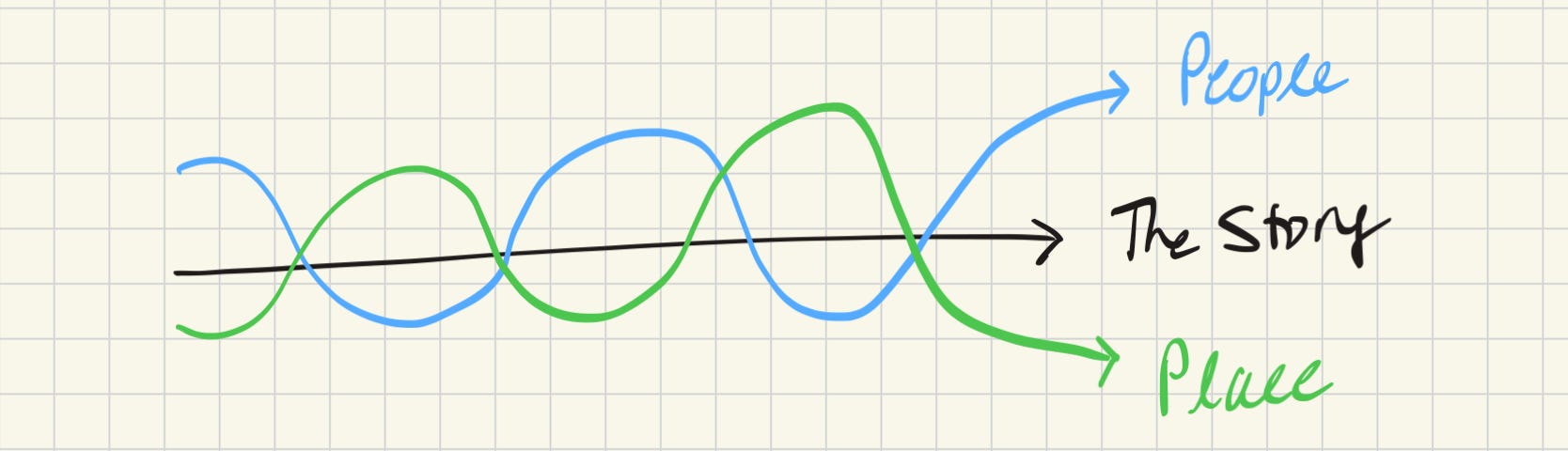
People & Place really is the footprint of my Life’s Task because it represents the two most fundamental things about the ‘wise ape’ - our deep, eternal need for connection to the place we live, and the people we live there with. If you’ve done your documentary homework you know that chimps are only alone when they walk off into the forest and lay down to die. Every time in my life where I’ve felt some kind of sickness (some kind of dis-ease) the red flag has always been a creeping feeling of separation from people and place. Do not do that.
When you see it once, you’ll see it everywhere, and then the questions bubble up like the fizz in your diet coke. What is a country now? It’s not so easy to describe when you actually think it through, but what inevitably comes to the mind and spirit is (1) the land and (2) our communities. Of the physical place, and the other people who inhabit that place - of ‘blood and soil.’
Love of land leads to a sincere type of nationalism that spawns, at our best, the Olympics or the United Nations1, and at our worst, war and conflict. ‘Vive la France!' - they bellow as they man the trenches and storm the plains. Interestingly though, when you break it down, most people can’t answer what that feeling is. Why do I feel so strongly about this place? Surely it isn’t because of one species of flower, the particular quality of the soil, the grass species there, the rocky outcrops, or the coast. It’s a feeling that we know we know, but we don’t know why we know. It’s because we are of that place, as much as we moderns would like to deny that.
Love of people and communities leads to group identity and deep attachments. It’s why my working definition of culture (culture is a verb) is it is the sum total of the daily agreements we make with one another, in our places. Some of those are thick, some are thin, all are important. We can’t underestimate the power of groups and culture. Several years ago I read a United Nations report on terrorism in Africa that came to the fairly clear conclusion that immediate group identity was even more important than religious group affiliation, even though at the macro it might seem like, or we’re led to believe, it’s the other way around.
All of the fundamental, important, questions lead back, in some way, to people and/or place. It’s also the fundamental reason why Birthrate and Borders are the core features of the first book that this platform will spawn - there has never been a time where the people and place questions are under such a microscope.
So then, before we launch in to our case studies, we ought to level set on two fundamental People & Place questions:
How do we actually get to know a place?
What is culture and why does it matter?
Let’s dig in. 🤝
And I learned that: to return. I came back the following year and the year after that. I hope to return every year (after all, I may never have the chance to learn so much), until I have no one to return to. - Bill Buford
The Macro 🌎
5 interesting links to the world at large.
Are local churches becoming Ground Zero of the birthrate and borders story?
How Aldo Leopold turned a lawyer into a bison rancher
Is there a startup renaissance in Northern Europe or is Joseph Michael just really good at reporting on it?
The UAE plans it’s OPEC exit as of May 1 - is there trouble in the neighbourhood?
How would a new story for boys and men impact birthrate and borders? Scott Galloway on the Huberman pod
The Micro Place and the Macro Place
My optimism has another feature, beyond feeling deeply connected to the work that I do - because there are pockets of our global culture emerging that appear to be some kind of Great Remembering. A ‘remembering’ because these are things we once knew, that we’re coming back around to (cycles again). Like our vestigial organs (tail bones, etc.,) we have vestigial skills, abilities, and feelings, that once you’re out of practice take some remembering and re-learning.
I rarely feel as certain about that as I do in the health and wellness discussion, because so much of that story centres around connection to people, and engagement with place. Many of the people we are remembering from are the older folks who keep the stories of us alive, and then pass them on to the young. It begs the question what will happen to that tradition when all of the young are focused on the global, instead of the local, and would prefer to ask ChatGPT rather than call a friend, mentor, parent, or grandparent. This is the predictably nasty consequence of the ‘just Google it’ culture.
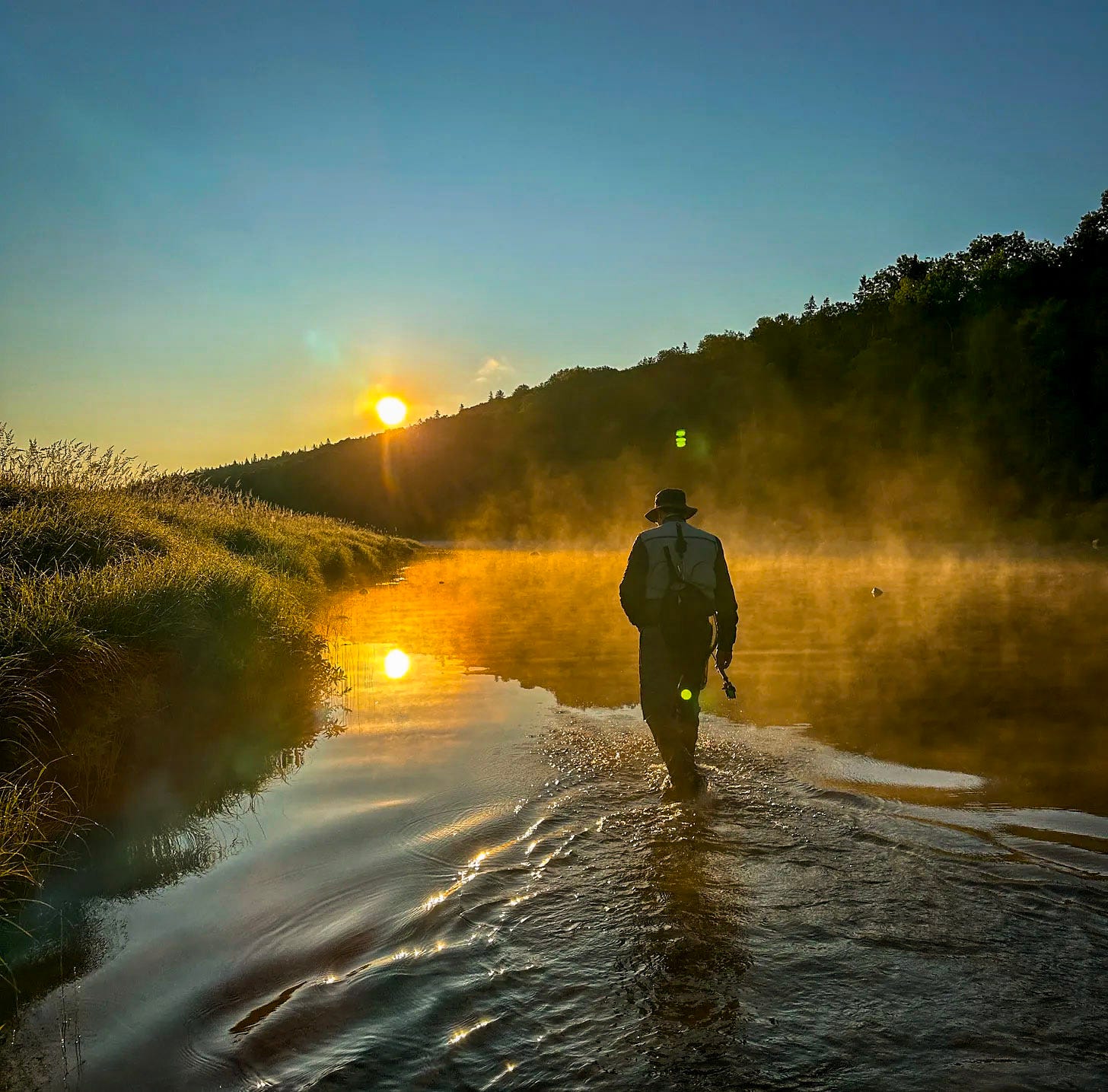
In my home region, fishing season has officially opened. Only specific waterways - like brooks and rivers, but lakes are not far behind, and the salt-water seasons roll in cycles throughout the year. The photo above is an early-morning shot of my fly-fishing mentor, traipsing through the river, into the morning mist. We were bound for a specific patch of reeds on the far side of the river, where we knew the bass would be bedded down. It used to be trout and salmon, it’s now bass. Again - infinite cycles that we simply cannot control to any great degree.
Ideally we have many mentors in life, because it’s our mentors who have the depth of knowledge required to know a thing or a place deeply, and then to pass that on to those on the come up. As we will see in the next section, our mentors on the land are particularly important to People & Place because it is these folks who know a place as intimately as anyone knows anything.
In my own individual way (that is ultimately all we have) economic development is again the thing I can’t help but see in everything. Traditional definitions won’t do here because a certain subset of you will hear the term and only think - money. I don’t fault you for it! Our discipline suffers from a lack of context and definition, and is ever-changing, so even asking the question what is economic development is a real test.
I think the visual looks like this, and the headline reads - ‘…a process by which a people and place work to achieve their full potential2.’
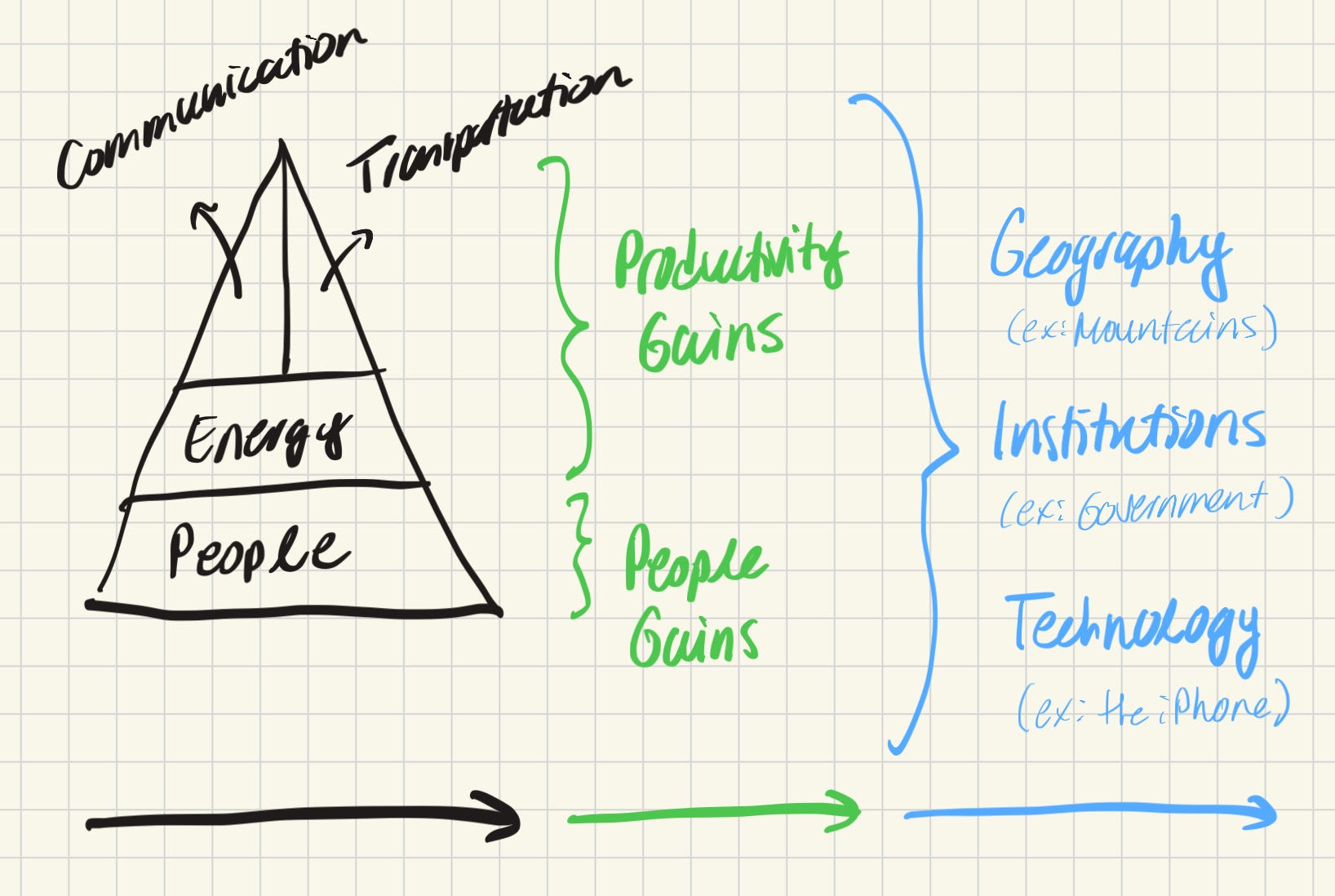
So how do we get to know a place? Start at the beginning.
The Micro Place
At the micro, we can’t help but start in the natural world because it gives us the greatest chance for deep connection to a place. For Steve Rinella - one of America’s finest outdoor writers and documentarians of the natural history of the United States - his favourite episodes of Meateater have always been with those who have an unbroken, long-history of daily engagement with the natural world.
As Tim points out in the interview above, not only is a disconnection from nature a problem that these traditional societies wouldn’t describe - they wouldn’t even understand the premise of the question. How could a disconnection or independence from the natural world even be possible? The reality is it wouldn’t be, couldn’t be, and that means daily life is spent on the rivers, on the ocean, in the forest, in the jungles, or across the plains. Often it involved animals for transportation and food, so connection to nature was compounded.
Daily life was a series of intimate connections with the natural world. The good news is this tradition still exists in the modern ‘West’ - even though we are one of the few who are almost completely disconnected from daily life in nature. We saw this during the COVID19 pandemic3. Your local friends were barricading themselves in their homes (not without just cause - the tone from every level of government was fear based), under the curious impression that they could be forever-and-always safe from the outdoors, from other people, and from a virus that was spreading rapidly.
Juxtapose this with your Nigerian or Guatemalan friends who carried on with daily life, without fear (for the most part) and with faith. This isn’t because of any kind of special morality, it’s because daily life simply must go on. There are things to be sold at market, there are relationships that need nurturing, and there are repairs to the infrastructure that need repairing.
For those of you with outdoor mentors, you know that this group of people are history-keepers of sorts. Often this knowledge is concentrated in the elder community, and it is up to the young to draw it out of them, document it, continue to live it (as best you can in modernity), and then pass down the traditions when it is your time to do so. I’ve experienced this directly in far-off places, like the Amazon, but you can just as easily experience it at home.


In my paternal lineage this tradition is strong and, for the time being, still alive. My hunch is this is because we come from an island culture, and island cultures have always had a fierce sense of independence, productivity, and gumption - often by necessity.
The history keepers have a special sauce that often allows them to balance their immediate environment with the world at large - they can think globally, and act locally.
There’s Gerard, who began learning about his coastal home as a young boy, and learned how not to ride a camel at the ripe old age of 85.

There is Fred Best, long-time mayor and best friend of my grandfather - both committed patriarchs of their small community. Fred could tell you everything there is to know about being on Newfoundland soil and sea - a hard earned education of being there and doing that thing for his entire life - proof that this kind of knowledge is not possible to truly learn unless you’re in action.
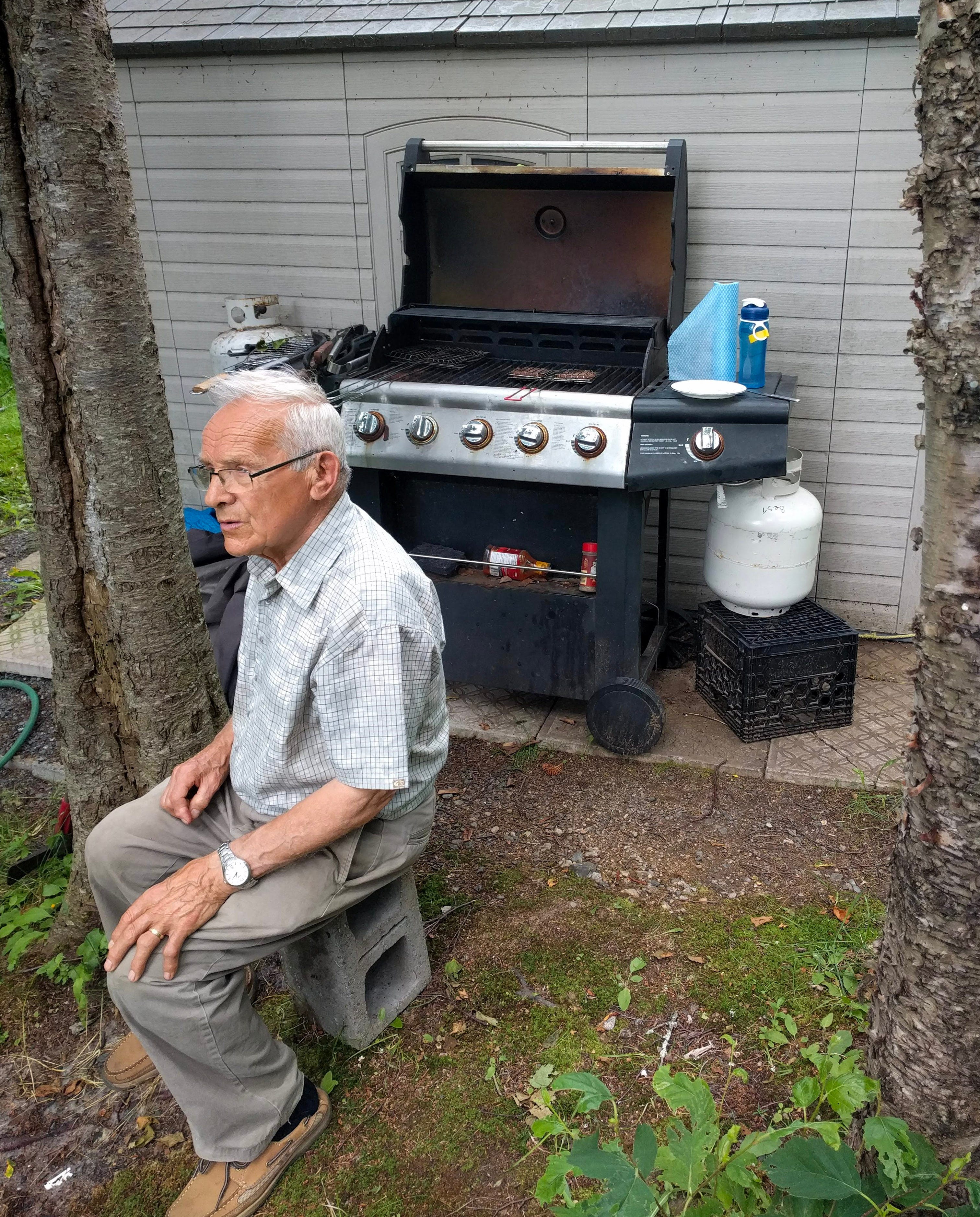
There’s Gord Tilley - one of the founding Tilleys of our hometown, who later spread into the rest of the Atlantic provinces - something Gord can tell you all about if you’re interested. Approaching 100 years old (seemingly not uncommon where we come from) Gord still gardens, makes his own salmon lunch, and follows his stock tickers on CNBC every morning. You can try to sneak something by Gord, but I wouldn’t bet on you. His kind is too present, and too attentive for that nonsense because they decided to forego use of the weapons of mass distraction.
In the people world, it means being directly, physically, involved in your local community. We often think this has to be running for politics or saving the day in the Facebook comments section. Not so! This can be as simple as being a dedicated, loyal customer of your local small businesses. As we learned in #53, SMEs are the lifeblood of economic development - they employ almost all of the people, they directly drive down inflation (more on this if you’re interested) and they are the fundamental reason why people want to live in a place. In the Human Movement Era, livability and opportunity will be underrated.
For me and my kind, it’s the local cafe. In a place built on pubs as the social hub (very British of us!), the cafe is the antidote for those who have never felt comfortable elsewhere. Not a discomfort so much as a preference, but you get my point. Even in the pub you can often find a delightful cup of coffee! I’ve written several articles about how having a vibrant cafe culture is seriously underrated, and my favourite Substack follows have noticed the same thing.
If there isn’t a local watering hole, the fabric of the community begins to fray, as people from different backgrounds and different circumstances stop gathering to share the news of the day4. Choice is good here (as it is across the economic spectrum) and people will naturally gravitate to the places that they are most comfortable in. The cafe becomes the central hub of the social and professional world in a place, and I can’t imagine life without them.
The Macro Place
The micro demands motion. Being physically in your immediate environment offers a perspective of your place (and your people) that many never get. Whether learning about how your place is evolving through walking, running, cycling, or paddling, being in the natural world with your community is totally intoxicating. The fabled ‘Walk and Talk’ is the perfect example of how getting to know a place ought to include knowing it under your own steam, as much as it includes knowing it by rail or road.


In the latter though, we can get an often exciting sense of the macro. In #55 I talked about the archipelago off of Random Island that is a frequent fishing ground for my family, and how being out in boat experiencing it gives you a much greater sense of it than staying on shore.
Inevitably, you make observations about the place that help you ground it in scale and in time - like when the Arctic terns come back and what that tells you about the seasons, or what fishery is good for the getting and what that says about ocean temperature, or how the fog comes in from a specific series of cliffs and how that anchors you directionally, or how the swells seemingly immediately grew to 6 foot and so you know you’re bumping up against the limits of Ireland’s Eye.
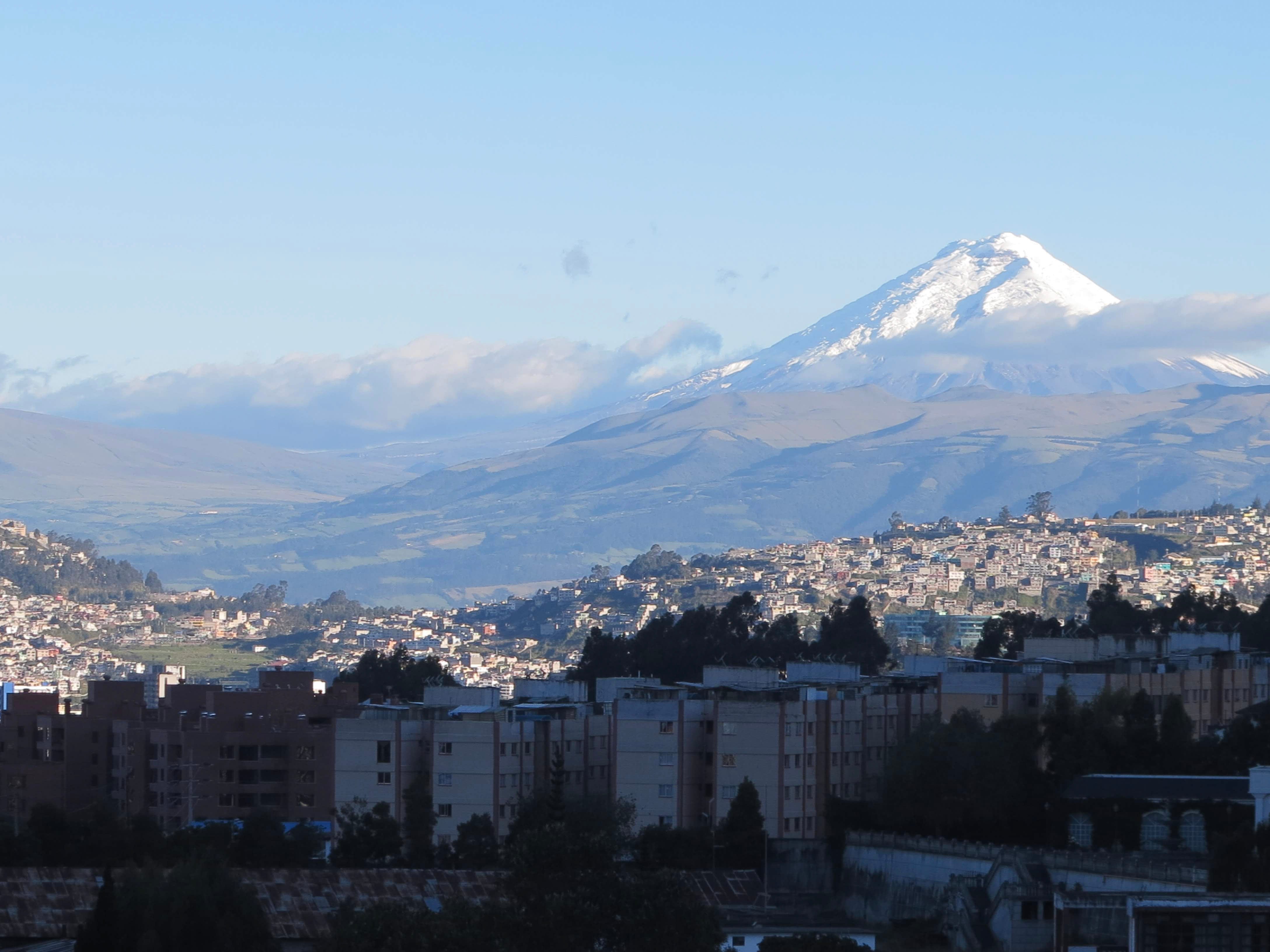
Understanding your macro range is different for everyone. For Jimmy Chin and his young, adventurous children, it’s the Tetons of Wyoming, and they’re worth knowing. For the storied climbers of the American West, it’s Yosemite. For my friends in the high-altitude plains of Ecuador, it’s the Cotopaxi or Pichincha, and for me and my people it’s two mighty rivers, and the Bay of Fundy.
Interestingly, having a relationship to the macro can grow from the personal to the political. When a country itself (a macro group beyond the community) forms a relationship with a place, it can manifest that relationship in how the built environment gets developed. This is true of the relationship the Japanese have to the coast, because for many in Japan, the coast = the potential for tsunami, and so the built environment of the coast looks very different in many parts of Japan as compared to what it looks like for me5.

To know a place, at the micro and the macro, is the true joy of people and place. To feel like ‘I am this, and it is good to be this’ is a sense of being rooted that is becoming more and more rare. That is the core purpose of this publication, and for the forthcoming book on Birthrate and Borders.
Be rooted in a place. Be of a people. Know it at the small and the big - at the micro and the macro. Engage with it, and be part of the drama unfolding there.
The most trite advice is often the most true - think globally, act locally.
The Tool(s) 🧰
A reader informed me that they find The Tools section slightly redundant, because there are tools littered throughout every post. Touche! I can’t help but agree with this, but I do like having a concise summary at the end for the TL;DR crowd. I realize that I have a hell of a time getting these to under 2,500 words (this one is 3,800) - and I’m sure it’s a treat for you when I do - so these sub-segments are a way to make the newsletter tasters choice.
In this case, there are actual tools that we can all use that are really quite useful, both at the micro and the macro level. Technology is far from all-bad, it’s just a balance. I have greatly benefited from the actual hard and soft tools that can help us paint the picture of a place, and to get to know it better.
Gaia GPS to understand and navigate the micro, dropping private pins on places like fishing grounds or interesting walks. You can share these for others if you so choose.
Flightradar24 to see where the leavers are going, and where the arrivers are coming from.
Google Earth to see how the macro is interconnected - forever and always - in the economic development era.
Another, more analog approach (which I do appreciate) is to buy your local guides and to take them into the landscape with you, referring to them instead of the tech, even if it might be more cumbersome. There is something tactile about it that honours our full sense spectrum that feels much less stressful.
You can buy the annual fish book in your region to understand local and regional outdoor regulations.
You can buy your regional rock climbing guides - with route beta from those that were there to do the work first - making these particularly good time-capsules of People & Place.
Your regional birding guide that you can take on walks in your local woods - a very good use of your time if you’re interested in calming your nervous system and understanding the seasons better. You can log what you discover in Merlin and share it with others.
Above all else, the tool here is to talk to each other. My rule of thumb - for what it’s worth - is to use the robots to quickly find facts and data. I never, and will never, ask it questions about interpersonal communications, writing, or problem solving, for the very simple reason that it is a it, and not a them, and that means something to me. It’s okay if it doesn’t to you. Find your friends that still have a direct connection to the antenna if you need help with this. We all need a Robin, Mark, and Alex.
This is a great Walk and Talk guide, if you’re interested in hosting one. If you’re athletically inclined, my good friend and collaborator - world renowned photographer Mark Hemmings - is teaming up with Mauricio and the team at Air Libre to host runs around the world6.
—
All we need is a point of view, a set of tools, and a lot of time.
See you on the road.
Although many of you will be (probably correctly) frustrated at how toothless it seems.
This is a small adaptation on the definition of the great and powerful Larry Smith from the University of Waterloo.
Interestingly, disease and pandemics are absolutely stories of place and they can deliver a hard-won lesson on our industrial world. Even at the personal level, if you’ve ever had something like a local parasite, you’ve been intimately introduced to the place you’re in and what lives there. I’ll post this photo of a particularly beautiful lake in East Africa below without comment and let you extrapolate on my experience of it.

Interestingly immigrant groups who immigrate from outdoor cultures, to indoor cultures, often feel this most acutely and there is a sense of unease that is directly connected to feeling separate and detached from the community. My hunch is that the rate at which they start food-based businesses is directly related to this feeling of not being rooted in the place. This can only be good for Main Street, even if it might not be the old, traditional businesses that you’re used to.
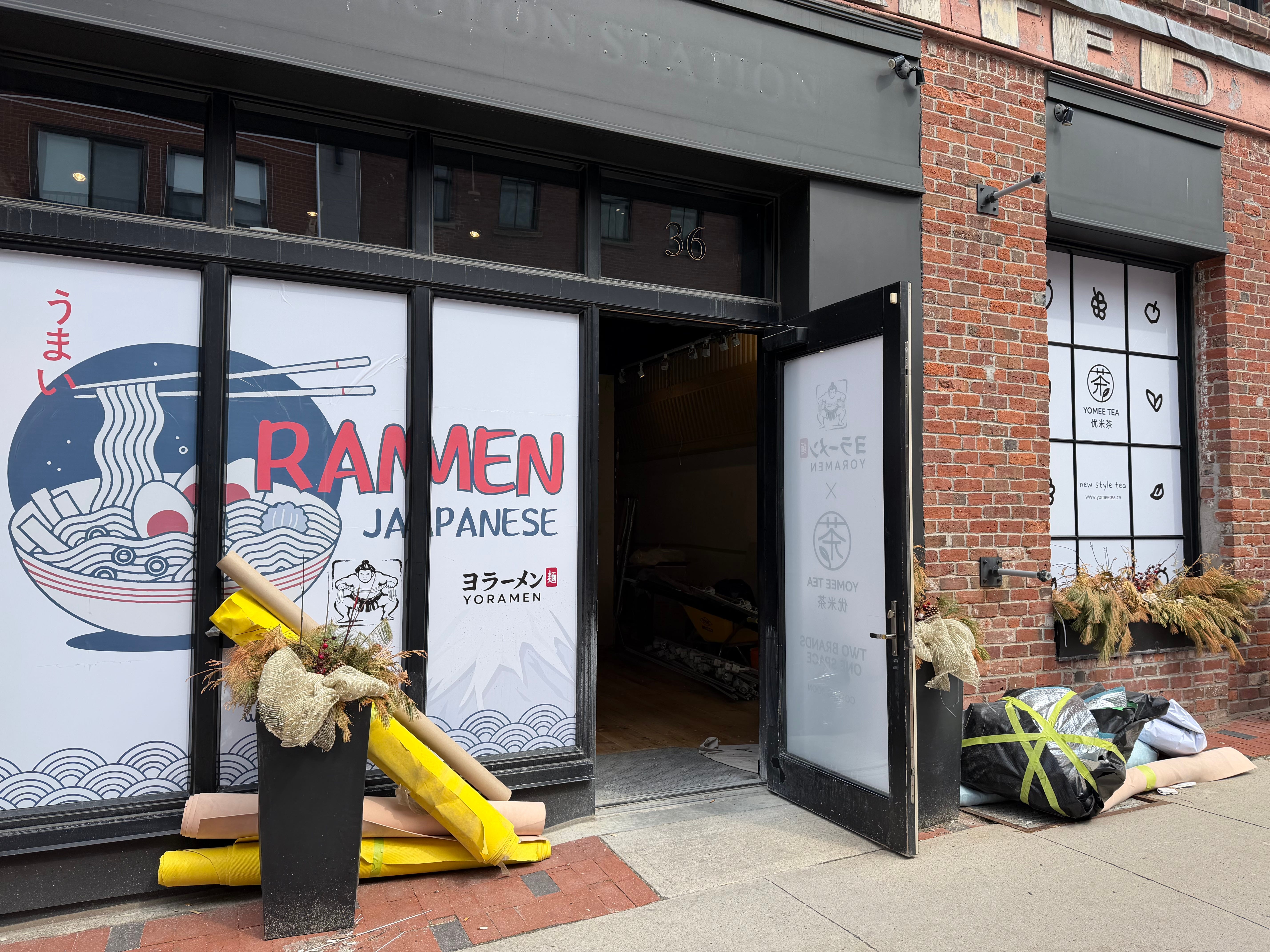
Even more true when you come from a port town, because the physical economy often starts at the port and then moves outward.

Mark and Mauricio will be coming on the podcast soon to talk about the world’s great running destinations!