



Greetings from Halifax!
As I write this I’m tucked away in Pan e Circo by morning - Halifax in low light. The delivery guys lining up at the back loading bay of Pete’s. The baristas talking happily, having just taken the extra 5 minutes to have their own quiet cup before the early morning regulars arrive. One walked through the doors at 6:52 while the inside of the cafe was still dark and the ladies were still doing morning chores. You know better than that sir. I wait outside in the cool October air for the chime of 7:00am.
Every morning unfolds in patterns and I’ve been interested in patterns since I was a wee bookworm. I now write about how populations and places change over time and that implies patterns. You can’t notice anything worth noticing unless you return, over and over, to see it for yourself. Nothing stays the same - the only constant is change, and the best we can do is deal with that reality and move forward.
In my experience, the best way to see a place is to walk it, and the more you embed yourself in a community the more you’re able to dissect and pattern-match in a way that becomes automatic. When something is automatic, you know you’re on the right track. Log that feeling - that pull - and continue putting one foot in front of the other toward your work.
There are two levels to work - the craft itself, and the rails of a project that you’re on at any given time.
For me, the craft is writing - I’m constantly dissecting what makes a great story a great story. Taking the proverbial red pen to each page and underscoring what I think worked, or questioning why something didn’t land quite right. I call it marginalytics -the more markup the better1.
If the craft is writing then the rails are People & Place - my newsletter and podcast project about how populations and places evolve over time, that will eventually turn in to narrative style books. Specifically, the Dad Books that the Wall Street Journal recently declare dead, and then resurrected days later. If the worst outcome here is being poor and happy then so be it. Never surrender!
I’m particularly interested in a place when it’s evolving rapidly and I get to see it with my own eyes or talk to people who are there. China’s leapfrog era - bringing millions out of poverty and basically going from no telecoms to cellphones. The hyper-diversity of the United States2 - especially its Universities and tech hubs. When emerging markets round a seemingly important economic corner, like Mexico or Poland.
The good news for me as a writer - perhaps the daunting news for the rest of us - is that the world is changing rapidly, seemingly everywhere, all at once3. It’s definitely happening in Halifax, and it’s still happening, as it has been for two decades, in Toronto.
For Halifax, moving further down the growth curve looks like fundamentals problems like housing costs and infrastructure - the traffic is ridiculous for a relatively small peninsula and population. People have to have somewhere to live that’s affordable on a full-time income, and they have to move around the city and have the basic services that that city affords - like water4.
For Toronto, it looks like wholesale transformation into a truly global city, with a major brand now that they’ve hosted the World Cup, extreme population diversity, and a real reputation as a global financial hub.
It was a particular morning in Toronto that made me wonder - wait a minute - are cities the new countries?
The idea of what a nation is, what it should be, and who can be a citizen, is as fundamental a question as there can be, and is rightfully the political question of the century. - Chris Arnade
Are cities the new countries?
We can never be sure when we first thought of an idea. And we can definitely never be sure the idea was ever even ours. I genuinely had the entire framing of what I thought might be the greatest fiction book ever written, only to finally have it dawn on me that it was nearly the exact plot of Origins - the 5th book in the Professor Langdon series by Dan Brown that I had read the summer before.
Good ideas get inside of us like an infection and we can try to further those ideas, bit by bit, step by step, word by word, like an infinite string of pearls - but they’re never truly ours. In that way, People & Place 59 is an extension on what I’ve read over the years - never more clearly than in Chris Arnade’s work.
My wife and I were taking in a lovely morning espresso in a majority Asian burrough of the city when a happily chatting group of Chinese neighbours assumed the seats next to us. There were 3 generations at the table, having a mix of communal and side conversations. The grandmother, a Baby Boomer spoke not one word of English, and was addressed directly only by the mother, a Gen X, in Mandarin. The mother floated conversationally in both directions, back to her daughter, a Gen Z, who spoke not one word of anything other than English.
It occurred to me that the Mother was generationally, geographically, and literally in between two worlds. That of her mother - who had presumably spent her entire adolescent and adult life in China, and who did not speak English (or little of it), and that of her daughter, who is virtually as Canadian as I am and doesn’t speak a lick of Mandarin (or little of it).
I don’t know if this is landing for you like it landed for me, but goodness gracious is this ever worth discussing further. For someone like me, that table was figuratively and literally - as Steve Rinella would say - History Candy.
The kind of story that makes its own gravy.
The lovely elderly lady - we can assume - lived her formative years, and maybe the majority of her life, in her ancestral homeland, in her native tongue, surrounded by others like her, only to be moved by her children to Canada for want of one reason or another. The middle-aged woman now operates as the family anchor, translator and shepherd to her aging mother, while also a full-time mother herself to what can only be described as a Canadian, English speaking daughter. And a daughter who is as Canadian as poutine and likely knows little of China, beyond what her grandmother and grandfather attempt to install in her culturally.

Now you may think I’m putting the cart before the horse here and seeing things that are not actually there but I think not! I’ve been a part of enough communities in my time to know that the story above is at least directionally correct, and I know that even more because all through this lovely town outside of Toronto, 99% of all conversations I overheard between Asian youth, even to each other, were done in English.
And so we can use this table of happy coffee/tea drinkers (coffee for the young, tea for the old) as a modern picture of how populations and places evolve over time. And in that very table we can ask - wait a minute, what is a country now? Are cities the new countries?
In P&P58 I included the video below, and quote shared it on X.


In it, Jeremy Clarkson asks what a village is (or is not) when many of it’s local hubs and services start leaving - presumably either having closed because of succession problems like kids moving to the cities, or having been rolled up into a big company that roams the rural heartland snapping up the little guys. It is a question that ought to be asked.
At the macro, a place is a political, social, and economic boundary. At the personal it’s where we’re from - the village, in the town, in the city, in the county, in the state or province, in the country, on the continent. Presumably there was a time when virtually all of those places, at the smallest level, were fairly homogenous5. It’s where you lived your life because that was the place you were from, and where your family was from. It was home. It probably didn’t even feel like a ‘choice’, as it is advertised now. It just was what it was. These are my people, and this is my place.
In the birthrate and borders era though, places all over the world have become multicultural and millions of humans continue to move around the world, pushed and pulled by factors like economic opportunity, or political uncertainty, or conflict, or climate.
Smarter people than me have entered the assimilation debate and what it actually means for a place to have a cultural identity in the 21st century. One of the ways that I have weighed in, in an attempt to add a pearl that may be novel or new to you in some way is the question of whether cities have become the new countries.
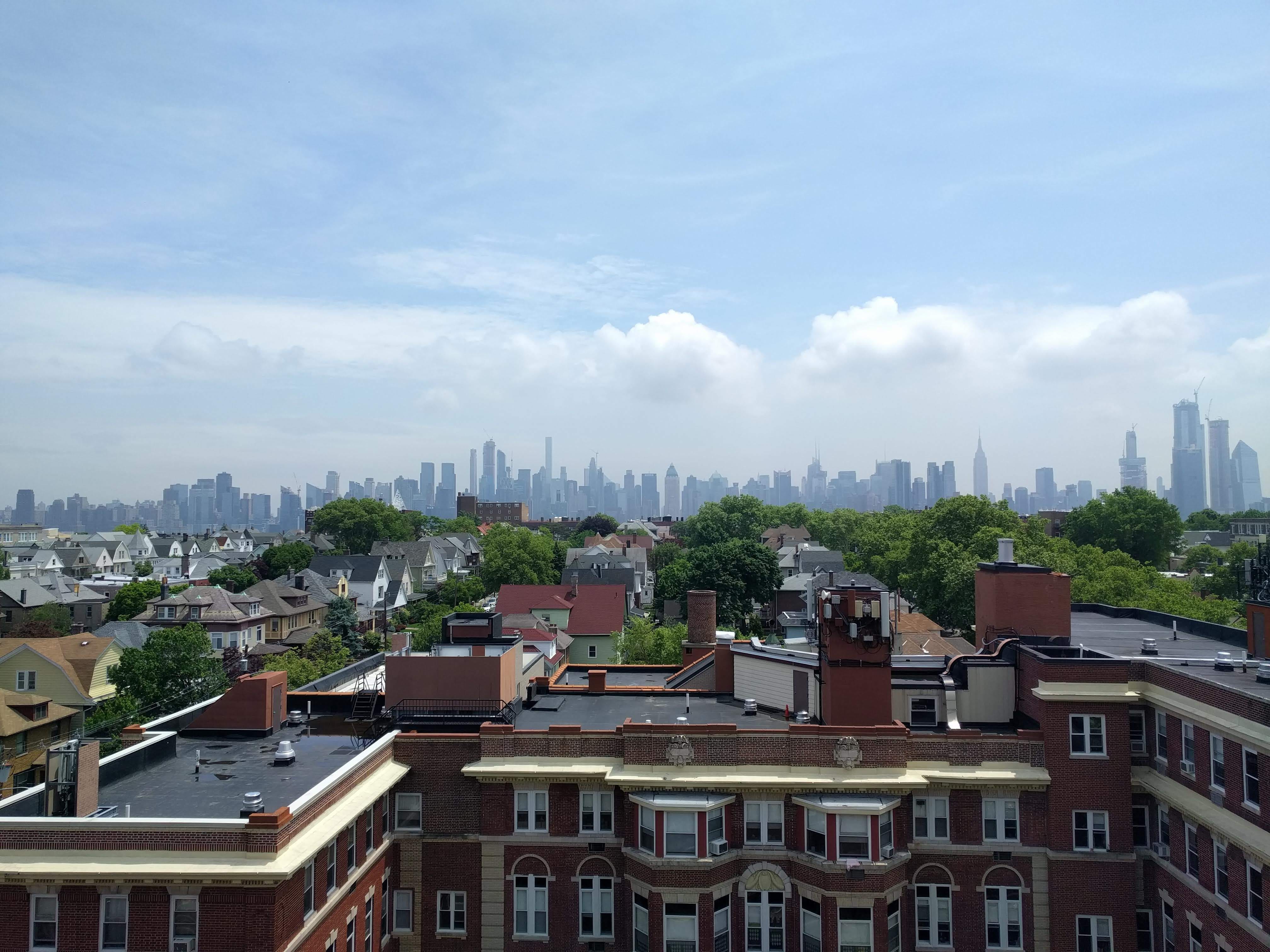
The question occurred to me once before that table in Toronto - in New York City - the inescapable hub of global awesome. New York is like encountering the whole world at once and you know this because your ancient nervous system is thrown into inevitable overdrive when you’re there. You don’t fully know this until you leave of course - remember, the only context your ancient DNA has for a modern situation like New York City is warfare. That’s why you’re so tense and alert when you’re in a megalopolis.
Before one of my closest friends moved back to the Kingdom of Saudi Arabia, I took him and another friend (you couldn’t write this border crossing story) on an overland trip by road and rail that ended in NYC because they wanted to see it for the first time. If you asked them about the trip, I wonder now if they would even mention the name of the country they were in.
They would inevitably mention brands and landmarks like Boston, Harvard, the Brooklyn Bridge, and New York City. There’s nothing uncommon about remembering landmarks first but my point is they would tell you they went to New York City before telling you anything about being in the United States of America.
Is that because I ❤️ New York is such a successful global brand, or is it because that place is now the world in miniature and so the association is first as a global citizen of New York City, as opposed to a citizen or resident of the United States of America? Is the same true of Dubai, Sydney, and London for tech bros and the financial elite?
It seems true that all or most major global cities have entered into some bizarre flattening out period that makes each eerily recognizable and interchangeable. That any major downtown in any major global city has flattened into an endless strip mall x IKEA x Starbucks - at least in the the McEurope districts - is hard to describe but feels strange.
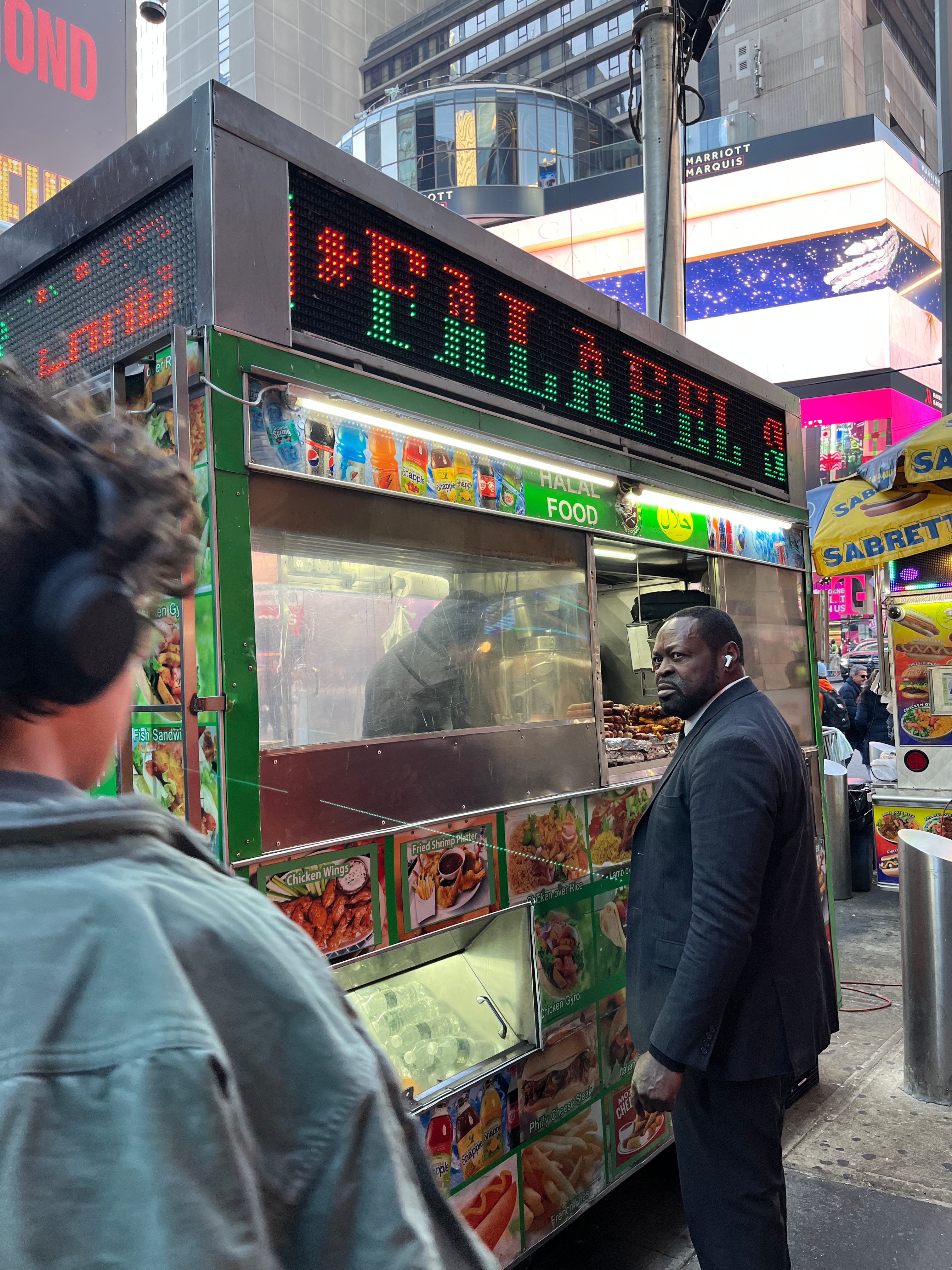
In Toronto, I wondered if you asked the young girl with Chinese heritage enjoying a shaken, iced espresso drink while her Grandmother drank green tea, would she first say she is Canadian, or from Toronto? I don't know the answer and I don’t know what that eventually means for nationalism, patriotism, and our modern idea of culture, but it is an interesting question to consider and talk about.
Maybe the central premise here is ultimately overrated and it’s really only the global, elite centres in the big cities that have flattened. That’s as good a place as any to start People & Place 60 - on what back row vs. front row means in the modern era. Let’s see what we find there. 🤝
—
All we need is a point of view, a set of tools, and a lot of time.
See you down the road.
-MG
This summer it was the full dissection of Patrick Radden Keefe - the man is good.
You can have whatever opinion you want on the current state of the Federal administration but the modern United States is the most successful diverse democracy in the history of the world by far.
I’m totally willing for this to be an illusion born of our royally screwed attention and dopamine, but something tells me it isn’t. For example, when WWI ended, American President Woodrow Wilson took a boat to Paris to work through peace proceedings. A boat. He was also said to have been enjoying “…the new moving pictures.” Fast forward almost exactly 100 years and you see my point.
If you want to hear something that I can almost guarantee is the first time you’ve heard it - friends of mine recently moved from Halifax to Montreal because of cost of living. Supply and demand ladies and gentlemen.
Obviously there are exceptions and I’m learning more and more how much mainland Europe likes is one.