


Greetings People & Placers!
There is an irony to P&P60 that should be called out upfront. I wrote most of it from Toronto - a city that I now feel very comfortable in and have come to enjoy. It couldn’t be more different from the context I come from, was raised in, and live in to this day.
Home for me is like this.

Toronto is like this.
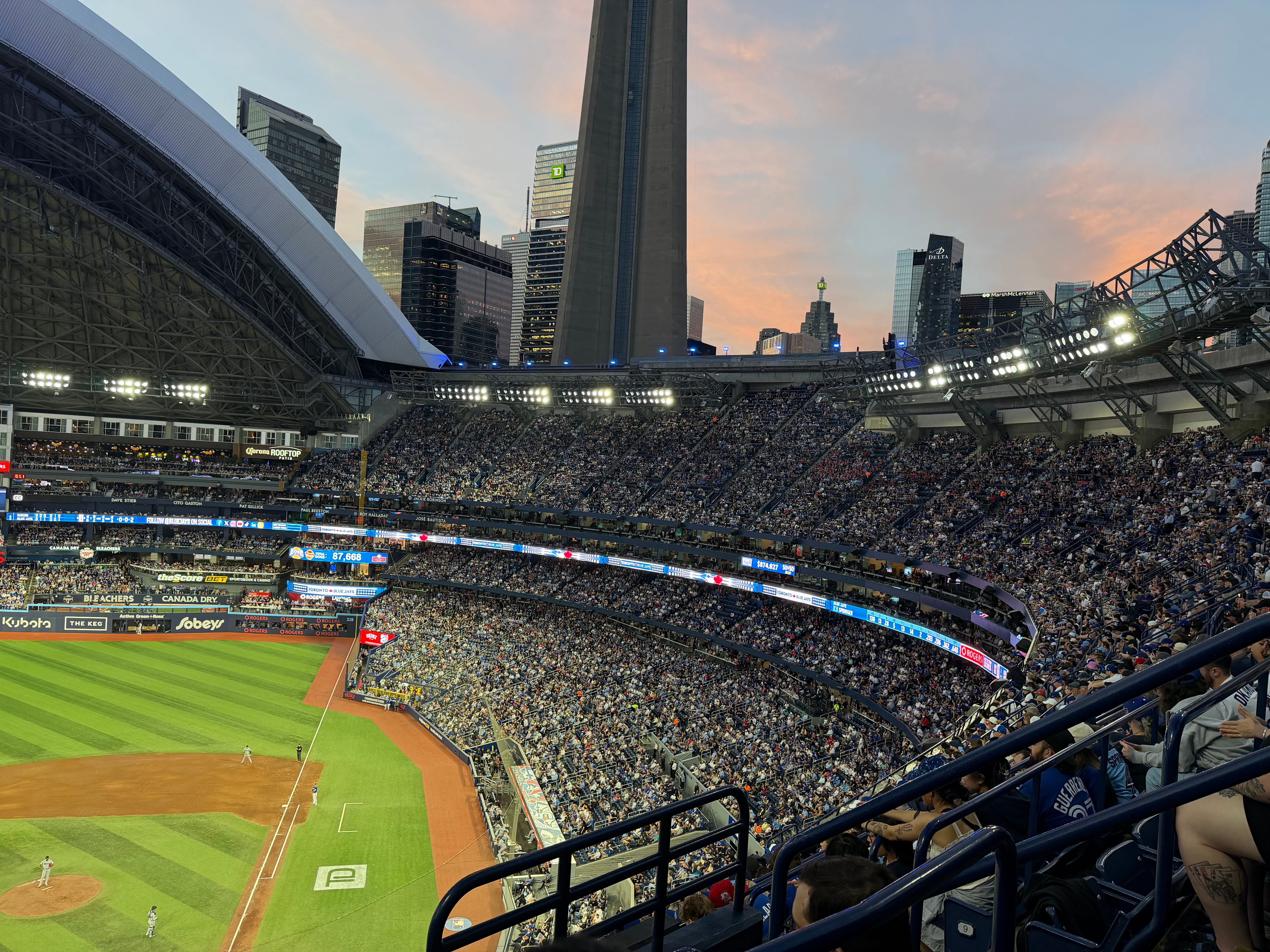
Irony simply because I have to admit that I do feel very comfortable between world and in the modern world at large, and I’m aware that that isn’t the experience everyone has. Home is where my heart is, but I’ve seen a good bit of what’s out there, in all of its globalized glory (for better or worse) and I can’t help but love it and be fascinated by it. To be drawn by it at a visceral level. I have been since the day I left home at 18 for Greece and Turkey - my context was blown open permanently.
My thoughts on our global era have changed dramatically since then, now in my early 30s, but I still have a sense of awe, wonder, and adventure when I think about us - the builder species - that have found themselves in a situation that is accelerating beyond belief, with no end in sight.
I know many of you feel a sense of trepidation and concern in our time, while others feel an overwhelming sense of optimism and possibility. You’ll understand why I feel a very real push and pull in the piece below - an exploration of the front row and the back row in the context of our modern era.
What a time to be alive. Please enjoy, and thank you for reading. 🤝
Patton’s Sherman Tanks
Each November I read a book that deals with WWI or WWII. Last year it was The Guns of August and the year before that it was The Splendid And The Vile. I’ve always felt connected to Remembrance Day, have a grandfather who served, and the period fascinates me. Europe has been the global focal point of the social and professional world I live in for at least the last decade, and it’s there that the roots of my heritage are planted.
Getting a jump start on this November, it occurred to me that I hadn't properly been able to tie the two periods together. What happened between WWI and WWII and how do they inform one another? What’s in that 20 year period that is important to the times we live in now? As Chris Arnade recently reminded us:

And so I decided on Paris 1919: Six Months That Changed The World from Margaret MacMillan. It’s the kind of book that takes all of 5 seconds to hook me - great cover art, maps at the front, main characters who impacted history in ways good and bad, the places they represent and that shaped them. It’s exactly how I aspire to write, and it’s what I love to read so I knew it would be hard to put down. What I wasn’t expecting was how perfectly it would fit in to the material for People & Place 60 - a look at what might be the great dividing line of our time - not race or economic status, but front row and back row.
The front row are the visible, social, political, and academic roles in a culture. The supposed elites that sit on well-meaning committees and frequent dinner parties. They are often the drivers of what we see as pop culture, and what we eventually live with as policy.
Much of the front row is defined by ego and status. That isn’t a judgement and it’s perfectly natural - we are a social animal that form hierarchies and angle for power and influence, the good and the bad kind. In the front row it doesn’t so much matter what’s true and real, so much as knowing how to move and operate in that world. To be able to tell a story and to use that story to peddle influence.
Undeniably, these folks are important not because they define popular culture - that’s easy enough to ignore - but because they make policy and publish studies that influence the built environment that most of us live in. We interact with the front row in meaningful ways even if we are not all of the front row. District 12 and The Capitol.
The back row are those who do the daily, quiet, critical, practical, physical, often invisible work that needs doing in the world - farmers, linemen, plumbers, teachers, shopkeepers, baristas and bakers. These are the firm layers of the foundations of modern life - literally and figuratively the bedrock of how a place actually works.
The back row is driven by a physical quality - of a felt reality that doesn’t exist in the imagination or the academy. Those who make up the famous American Middle Class who were so unique (and in many ways still are) to modern history.
In the clip above, Victor Davis Hanson tells the story of how General Patton thought the Sherman tank was a big reason the Allies won WWII. The Sherman tanks were simple, effective, and easy to repair in the field - unlike the German Panzers that were highly sophisticated, but needed to be sent by rail back to a manufacturing centre. That simple, solid equipment paired with an American serviceman that was often mechanical and handy in a way that the average German was not was a huge advantage.
“...they were a mechanical people…what he was getting at was - ‘My guys fix everything, they grew up fixing cars, they can get a Sherman track back on in two hours…they grew up on family farms’…”
That kind of can-do spirit that the American frontier produced is alive and well today in the back row and is a hallmark of where I come from as well. It’s a confidence of capacity, and this is a learnable, teachable skill that is clear in Victor Hanson himself. In fact, he might be the perfect kind of person to bridge the front row-back-row-divide - as so many farmer-intellectuals have been before him because he represents the dying breed of the renaissance man. Someone who studied languages, culture, and classics, but still had to assume his natural role in a California farming family in the San Joaquin Valley.

In the former, he gets to have his hands in the soil, take his product to market, and sell it. The back row has the gift of daily contact with reality - of life as it really is without the social media filter. The thing either works or it doesn't. The power either came back on or it didn't. The house either got framed or it never got started. The food was grown and raised or it didn’t make it to market1.
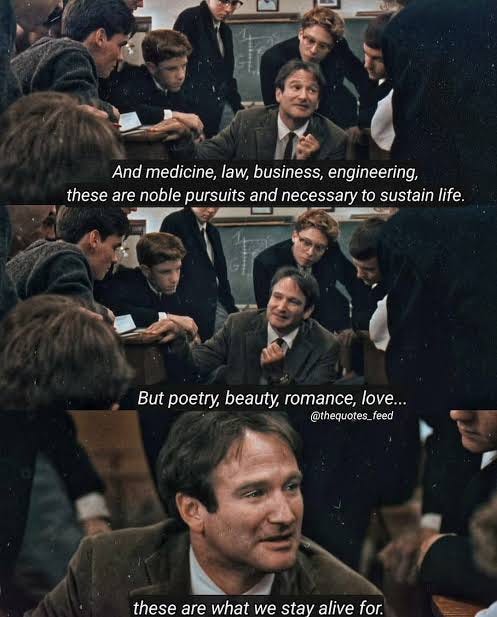
In the latter, he gets to deal in the finer things of life as an emotional, spiritual being that we humans are. The front row has the gift of privileged access, insider media, and being in rooms where decisions get made that impact everybody else. It’s here that pop culture bleeds into policy and so it’s essential that the front row works hard to understand the reality of the working and middle class. If they don’t, they run the risk of making policy for thee and not for me.
In the latest season of Clarkson’s Farm2 we saw the apparently justified rage of the British farming community when a new inheritance tax law was being considered in the houses of parliament. The details aren’t important - what is important is that the government claimed it would only affect a minority of farmers across the country. Farmers themselves were saying that wasn’t the case and, even more, it would be financially crippling to many. Why the disconnect?
One obvious reason is we built an economic and political system designed to measure and manage in facts and figures. We understand the cost of hardly anything anymore except for in dollars because that makes the spreadsheet neat and tidy, and things that are messy (like, ahem, being human) make us uncomfortable. We can’t write our year end report on the messy and we can’t plan next quarter on the human!
This is not black and white. While the front row has successfully delivered in material wealth and a God-like ability to heal the acutely sick, we have failed completely in delivering social communities, happy and healthy families, reproductive health, and long-term wellness. It isn’t worthwhile to opine for a time long gone or to be nostalgic, but it is absolutely appropriate - and necessary - to ask the question of what we’ve lost, why we’ve lost it, and how to get it back.
The farmers and food producers that make up the back row are one of the best possible places to start because they are everything the front row once feared, and now seems to wish they were3 - independent, capable, social, healthy, productive, land owners4. Those who understand at a core level Nietzhe’s maxim - ‘First learn to lay bricks, then how to build.’ Even becoming a part of the farming community at the consumer level, or heaven forbid going to forge it yourself, ties you back in to a local process that feels completely natural and wonderful.
It is here that we finally begin to merge what Chris Arnade and James C. Scott call the Techne and the Metis of a place. Put simply - scientific or theoretical learning vs. good old fashioned common sense. The latter is systematic, formal, often hard coded in books or laws or policy, and can only be enforced from the top. The former is - in Arnade’s words - ‘…the practical, experiential, and tacit knowledge. It’s the accumulated wisdom or know how that comes from practice or lived experience.’ Naturally, metis is bottom-up.
The metis is gained through earned, unavoidable, reps in the real world. Action and reaction. Earned, because metis requires that you act, and unavoidable because there simply is no other way to get it. If we have a techne class that is totally removed from any sense of the metis…“We risk entering an age of Techne without any Metis - technology advancing without practical wisdom to bound it.”
Urban planning that looks perfectly orderly on paper, but doesn’t actually work for anyone in the real world. Laws and policy in the houses of governments that impact people in a way they could not foresee because they didn’t immerse themselves in the streets.
The techne is seeing the now awkwardly generic global city centre by airplane and the metis is travelling by road, and on foot, through the small towns on the fringes of the centres of academia, politics, and finance.
“Metis is the epistemology of the masses, and it is decentralized, local, and bottom-up versus Techne, which is that of the elite, and so is codified, formal, and top-down. Common sense versus book smarts, in Metis terms, and folk wisdom versus fact, in Techne terms.
Neither encompasses truth, so I believe you have to engage with both. If you focus solely on one, you will end up like the guys at the gym who never work out their legs. That analogy is especially appropriate for today’s elites, who seem to only do Techne days, never Metis, and so come out top-heavy, with spindly legs, too fragile to walk among the masses. I get it, going out into the world, dealing with people on their terms, can be intimidating to intellectuals, which has consequences, because while I value both, most people in the world are Metis, and consequently understanding it is essential, especially in a democracy.” - Arnade
How do we bridge the divide? How do we close the chasm of misunderstanding?
Perhaps at least some answer is to be found in the question - what is culture today, and who actually builds it? For a start we need to lay some ground rules, and it’s Canadian anthropologist and National Geographic explorer Wade Davis that gives us the first rule of culture.
Other people are not failed attempts at being you.
That’s next on People & Place. See you there, mate.
—
All we need is a point of view, a set of tools, and a lot of time.
See you on the road.

Our current health predicament is a story I’ve dealt with more than once on People & Place.

Season 5, Episode 2.
I encourage you to follow the delightful character arc of David Beckham if you’re wondering what I mean.
I didn’t realize how underrated this is and will be a huge portion of either P&P61 or P&P62. It’s hot off the press and has been a central debate of American political life since at least the 80s.