



As you well know by now I am a big fan of ritual, routine, and process. Daily discipline is an odd form of freedom, but seems to be exactly that. You make time for what actually matters and suddenly everything else seems to fall away naturally, as if that’s what ought to happen. And so in January I take stock of the last year and welcome in the next in a variety of ways. It’s much less about quantifying anything, and much more about sensing and feeling what is essential and what isn’t for the year to come1. Hopefully with each passing year we get closer to the sense of allowing our lives to unfold naturally. It’s only then we do our best work.
Each year I listen to podcast rewinds - one of them, the Honestly podcast with Bari Weiss. It’s engaging, often funny, and is a great cross-section of the year behind, and ahead, in different areas of life. This year people like Suzy Weis, John McWhorter, Niall Ferguson, and Mark Hyman made an appearance. The former and latter each had great segments - Suzy on optimism over data in 2026 (which speaks directly to my soul) and Dr. Hyman about what’s in and what’s out for our health and wellbeing2.
Suzy’s general point was optimism is back and wallowing in how miserable we think everything is is out. Mostly because it isn’t, and also because endless victimhood is tired. Self-pity is out - hopeful, consistent, daily action is in.
For Mark Hyman, getting in touch with what we sense, and thus know is good for us is all the way back in - like sunlight, good sleep, and eating real food. Habit trackers, oura rings, blue-light gyms, and the infinite productivity loop are out. Hallelujah.
Balance is as key to human health as anything. We are balance machines, remarkably adaptable to our environment, and versatile in a way that few other species are3. We all have our aha moments - or we hit walls that show us when we’re out of balance. For me it was a combination of the two. The wall came, I was laid flat on my back, and the aha moment that followed was centred around circadian rhythm - the ultimate balance.
Circadian rhythm - the light story - may be the greatest story never told. At least not in the way that we moderns can understand it - that the earth is a miraculous, decentralized system, governed entirely by the cycles of light and darkness. That sunlight is essential for wellbeing and is not in fact trying to kill us. The sun is the ultimate life giver, and photosynthesis is the only reason we’re here on this amazing planet.
Nowhere is that more clear than as you approach the equator - where days and nights all year round are roughly split in two. I’m writing this from the 20th parallel North, in a country I’m starting to love, and one of the first things you notice is how allowing health seems to be almost effortless in the tropics.
“‘Ahhh, you learned my secret!’ Erwan calls from down below as I approach the top of the pole. ‘The best secret of all - your body always has another trick up its sleeve.’” - Natural Born Heroes, Christopher McDougall
Another Light Primer
I remember precisely where I was when the light story first landed for me. It was a where were you when moment that we all have. It’s unseeable in a way that few things are. It was the podcast below - Dr. Max Gulhane interviewing neurosurgeon Dr. Jack Kruse.
Have you ever had the experience of listening to something that makes complete sense to you the very first time you listen, and so naturally you can’t stop listening to it? This is paradoxical because typically when we get the message we hang up the phone. Not so with Kruse and the story of light.
The story that Jack lays out in the podcast is simply the tip of the iceberg. The first step that leads back to the dawn of the age of mammals, some 66 million years ago. It seems to strike two chords at once - it explains our early origins - how we came to be who and what we are, and it also explains our current predicament - inhabitants of an era of screens, disease, depression, and division. The fact that both stories can be defined by the light and dark cycles are as mind-blowing as anything I’ve ever learned.
The story - in it’s shortest possible form - goes something like this.
Dr. Jack Kruse was an obese, unhappy, neurosurgeon gifted a book by a friend after the meniscus in his knee all but imploded on the way to the keynote podium at a medical conference. The Monk Who Sold His Ferrari resonated with him but he couldn’t quite put his finger on why. Later, while on family vacation in Italy, he was struck by epiphany - the pieces clicked into place.
Looking up at the Statue of David, the cornice of light illuminating the marble, Dr. Kruse realized that what so intrigued him about the book, and what intrigued him now at the foot of David, was light. As it turns out the story was even better than he could have imagined and Jack dedicated the rest of his life to the epic realization that the story of Homo Sapiens is a story of light.
Interestingly, but not surprisingly - I’m not far from where that story began. According to the current scientific paradigm, The Age of Mammals began some 66 million years ago when an asteroid hit the Yucatan Peninsula, in South-East Mexico, where I write this now. The asteroid was roughly 6-9 miles in diameter and formed the Chicxulub Crater4.

That asteroid strike set off a series of remarkable natural events - a byproduct of living on a planet that frequently passes through crowded asteroid belts. The section below is a ridiculously short summation of a nearly infinite rabbit hole, but just take it piece by piece. The puzzle pieces will click and you won’t see our amazing planet the same way again.
Before the great asteroid strike, for the proceeding 140 million(ish) years, our original ancestors were furry little creatures that lived under the ground. Dark fur is filled with melanin (the stuff that builds up when you get a tan), and melanin fluoresces in sunlight. They lived under the ground, so the story goes, because theropod dinosaurs can see the UV spectrum and so they would be easy pickings for the creatures that ruled the land at that time.
When the asteroid struck, the debris it released blotted out the sun (we don’t know for how long) which meant that UV light didn’t make it to the earths surface. The dinosaurs went extinct (except the uniquely adaptable few - like those that could fly) and so we emerged from under the ground to take our place on land. The Age of Mammals had begun.
Eventually UV light returned to land as the atmosphere cleared, and we evolved over long-history into nearly hairless creatures that are experts at processing UV light for cellular energy. The opposite of what we once were because the light environment had changed. Then, and now, we are literally walking solar panels, with light processing technology covering the surface of our skin - our largest organ.
“Nature made us to be addicted to the sun.” - Dr. Jack Kruse
The Homo Sapiens that evolved in regions of the earth with near constant sunlight retained their melanin because melanin is an expectation of sunlight. Those that migrated North over long-history, away from equatorial regions, pulled their melanin inside, and became extra efficient at processing the little light they did have into Vitamin D5.
We developed eyes that are ultra-efficient light processors - black pupils that focus light when it’s plentiful, and expand to seek the light when it’s dark. This isn’t a mistake (nature doesn’t make those) because some of our most effective Vitamin D and melanin factories are right behind the eyeball6.
Cycles of light up-regulate our energy systems, and cycles of darkness down-regulate so that we can access the miracle of healing sleep.
Pause. Let that sink in. It gets more remarkable with every read, and then when it finally does sink in we realize that, if that’s all true, we are now presented with a remarkable problem. Nikola Tesla electrified the world at the Chicago Worlds Fair in 1893 and ever since we have all but eliminated light and dark cycles. We shine bright lights into our eyes every minute of every day (screens) and do the same at night, so our bodies become horribly disregulated.
This disregulation leads to diseases of autoimmunity and, as Max and Jack discuss in the podcast, the only thing we really know about autoimmune diseases like MS is that as we approach the equator, they seem to all but disappear.
Enter, the tropics!
Welcome to the 20th parallel North, back to our early origins as a species.

Tropics - Effortless Health and Rhythm
In the tropics health feels somehow effortless - like it’s the default, if you let it be. This is exactly the opposite of forcing health through things like obligate running, going to indoor gyms, barricading ourselves indoors all day or fad diets instead of eating intuitively, and consistently each day, with the seasons.
There is a fascinating side-note on light as it applies to food that I won’t break down completely (because I’m still learning) but you can think about it like this. Think of light as a barcode on each piece of food you eat. Certain foods are available at certain times of year based on light and temperature (on latitude and longitude). When you eat the food, your body “scans the barcode” and that gives your body information. The information might be that it’s winter in Manhattan or it’s the summer in Tampa. Your body takes the information the light barcode provides and the necessary systems kick into gear - cooling in the summer, and warming in the winter. Now what happens to your body when you drink a banana smoothie and eat a raw kale salad in winter in New York City? Cold hands, cold feet, runny nose, etc. This causes constant cycles of sickness
On the Mayan Riviera, the light-darkness cycle is almost perfectly split down the middle in January. You wake naturally with daybreak, just before 7:00am, and make your way outside to enjoy morning PT on the beach7. The sun rises slowly, giving you that essential red-light therapy you need for your AM systems to boot into gear.

The sun is hot enough to justify a swim in the ocean - God’s Electrolytes - by 9:00am and so exercise comes naturally, by instinct, again. Breakfast is fresh fats, like eggs, avocados, and local fruit. Bizarrely, you don’t feel the need for caffeine (probably the ocean’s doing) but you likely make your way to the cafe for a latte, reading, writing, and chatting.
In the tropics you don’t seem to get hungry in the middle of the day. This is curious but also makes me chuckle with delight because it matches Dr. Kruse’s Leptin Prescription exactly. At mid-day, when the sun is high and hot, the light is all we need to make the necessary blood sugar to operate just fine throughout the day.
For me, this hot middle-portion of the day is my first feelings of a winding down cycle, and so siesta is on the menu. This is perfect because, although we are finally remembering how healing and essential for health the sun really is, chronic sunburn is obviously not good. We want to maximize light in all 3 natural cycles of the day, without burning. This is actually very easy to do8, and even more so if you take advantage of nature’s natural gift of siesta. It feels wonderful and intuitive, sleep comes easily, and you wake up in less than an hour feeling completely rested, cool, and ready for the second half of the day9.
UV starts to climb back down between 3:00-4:00pm this time of year so it’s clothes off again and into the remarkably aqua-marine ocean. Snorkelling, sitting in the sand, walking the beach to let those electrons move back and forth between you and the earth. Warm but fairly gentle sun covering your body and penetrating your eyes. If you’re into snorkelling it’s easy to see how you are simply a tiny piece of an enormous living ecosystem. This region has the world’s second largest continuous reef system, behind only the Great Barrier. It’s a nearly contiguous reef system stretching for some 1,000 kilometres, from Mexico to Honduras.
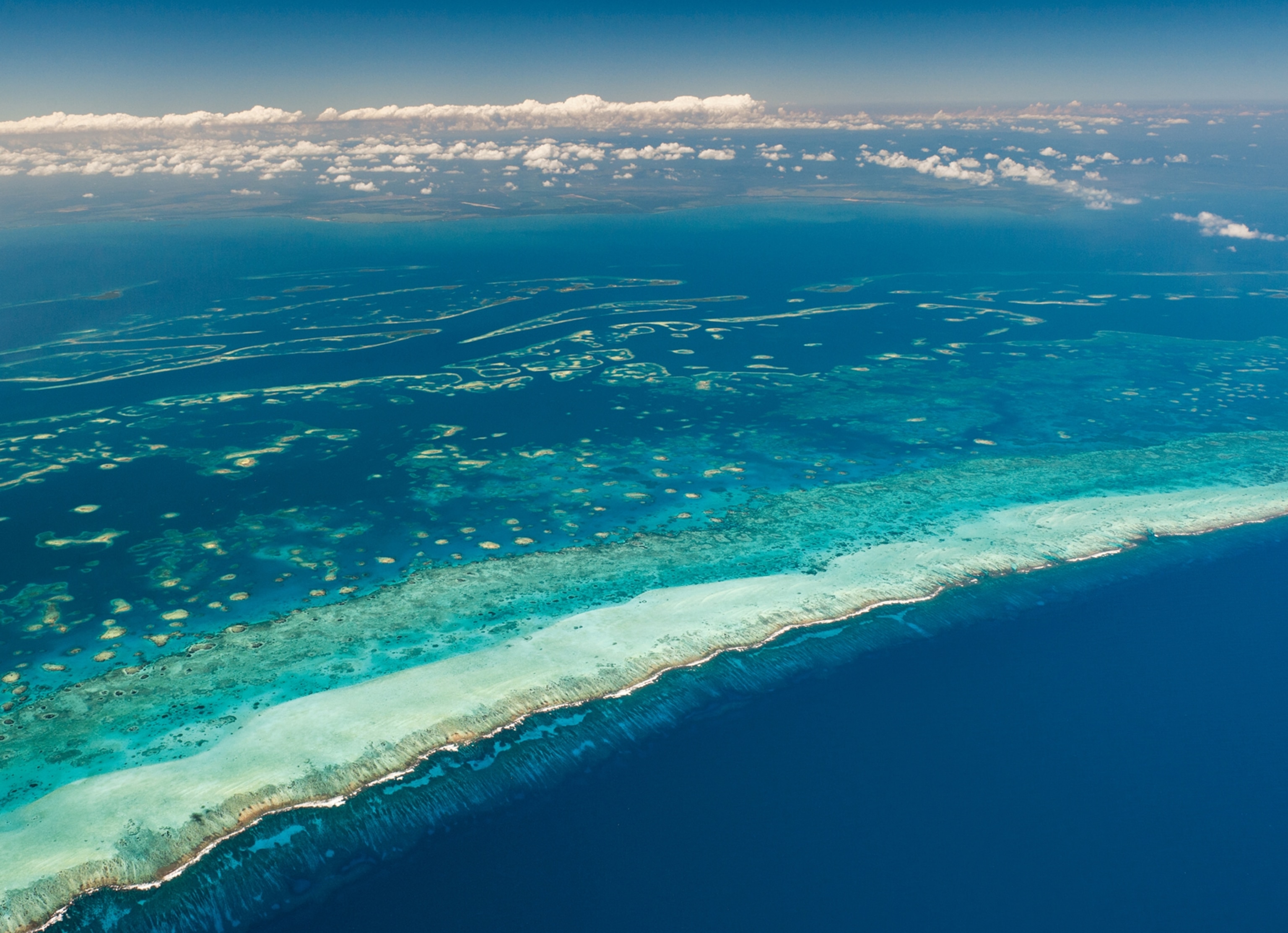
As the sun sets, you once again have the chance to absorb healing red-light frequencies, the world begins to slow down, and you can feel that sense of calm naturally, in your body and mind. Perhaps a later dinner than you are usually used to, between 6:30pm-7:00pm before going for a long walk or enjoying a table with friends. At night, let the light be low, because it is low.
Planet Earth is a remarkable, decentralized biosphere, controlled entirely by the cycles of light and darkness.
Unfortunately, for most of us are fates are sealed as modern humans. We don’t want to stress about this or we risk an even greater disruption in heath. There are some simple things we can do to honour our circadian biology and live healthier lives. This is a work in progress, we will never be perfect, we can rest easy and give up trying to be, and we can simply aim to be 1% better each day.
When possible, get the sunrise in your eyeballs (no windows, no glasses)
Get a reasonable amount of mid-day, full spectrum sunlight on your body without getting a bad sunburn (again, no glasses)
During the day, wear blue-blockers when you’re working on the computer or take frequent breaks outside if wearing glasses isn’t possible
If you can, take 5 minutes to watch the beautiful sunset (yes - no glasses)
After sunset, wear a nice pair of blue-blockers and sleep will come earlier and with much less effort - as it was always meant to
Let there be light. 🙏

—
All we need is a point of view, a set of tools, and a lot of time.
See you on the road.

This year Meditations for Mortals is helping with this. Burkeman is the antidote we all needed to burn-out laden productivity culture.
Excellent progress is being made where federal Food Pyramids are concerned. Science is a process of being less wrong over time and we were dead wrong about nutrition. Interestingly though, there is much more to be said here about whether or not we knew we were wrong. That becomes a matter of subsidies and special interest. More on that in the future.
I brought the paperback of Natural Born Heroes down here with me and it’s message is exactly this.
I’m on the other side of that peninsula, facing out (South-East) to the Caribbean Sea.
The melanin story is equally remarkable and is the fundamental reason why South-North immigration is a harrowing journey health-wise for those who do it, and it’s why we re-build our melanin so easily, and why we feel so good, when we travel North-South.
Dr. Kruse talks in the podcast about how he uses certain light frequencies directly in his patients eyeballs to successfully combat diseases of auto-immunity, like UVA and Infrared A.
We don’t miss morning PT friends!
Good nutrition, cooling long layers like a scuba shirt or linen button up, wide brim hat, not sitting out in the UV 10 for hours like a fool when you’re Barbara from Michigan. Look around you when you’re here, the locals are covered up. If they need to be, you need to be.
I have a feeling this would also be excellent for dopamine and cortisol in children who are allowed to be on screens constantly.