


I didn’t have entrepreneurship on my bingo card growing up. There wasn’t a single person I could name in my family that was one and it was far from the default option. Over time my uncle became the first, retiring from a long career in the American Coast Guard before starting a motorcycle training school in North-East Maine.
My path to entrepreneurship was roundabout and unintentional. When I started my career in immigration in 2016, we quickly realized balancing the scales between humanitarian and economic settlement is important and so we were supporting folks coming into Canada via entrepreneurship streams. It was my natural inclinations (and a lot of time) that led me to where I am now, and that was the basis of Pt. 1 and Pt. 2 of this series on how to do great work.
Eventually the entrepreneurial mindset took hold - the allure of working hard, being creative, making relationships - and it still compels me now.
I obsessively (but naturally) take daily notes and an emerging theme this year has been what people build, why, and who builds it. In my youth - where most people around me simply worked a job they thought was viable and paid reasonably well - I probably would have told you that ‘what people work on’ is overrated. Just go to work, do your job, and don’t complain about it. That’s how it was for our place and time, for the majority of working people. There is nothing wrong with this, and it deserves admiration.
Over time though, I’ve upgraded my thoughts, and I now see what people choose to work on as being very much underrated. What you decided to work on is how you spend your time - then your life - and so of course it matters. I don’t mean that you have to be ecstatic about it every waking moment - but doing your work means you get to be yourself, and that means the work you make is going to be good work. If you find your work soulless and meaningless, your work won’t be good because what would be the point.
This series is how to do that work - the work that is uniquely yours - and I expect I’ll end it here, in Pt. 3, because there are some important topics out there that I want to start covering deeply in 2026. In fact - I think I now know what the first book is about, and it’s been elevated in my brain as the defining feature of our time1.
The point of the finale is this - there is a process to find your work, what you work on matters, and you can start right now.
Here’s how to start.
“These characters change from place to place (national stereotypes can be a simplified version of the most popular) and a successful society understands this, and does its best to encourage and promote healthy roles that are easy to access. In Japan it might be the dedicated craft-person, in England the eccentric tinker, in France the “five hour smoking alone pontificating on stuff he doesn’t really understand at the cafe” guy, in Amman the devote Muslim, and so on.” - Chris Arnade
Listen to the end. Creativity in the audio genre is powerful and very human - 2026 will be a very interesting year on this front.
Third Space Joy
My local, as you well know by now, is a coffeehouse called Catapult, nestled into the bosom of a mid-sized port town on the East Coast of Canada. I spend the first hour of my day at the cafe reading, drinking a rather good espresso, and getting a few words down on this newsletter. It is the foundation of my early morning discipline - proof that it is always better to do something with the time you have than do nothing because you don’t have the time you want2.
This week the snow is blowing and the wind is gusting - as it does in December in Atlantic Canada. On a particularly wintery Saturday morning last week, I was the first on the steps of the old brownstone, and the doors of the cafe opened at the exact minute they were supposed to. Inside was warm, perfectly lit (warm and dim, not bright and surgical), the floors had clearly just been mopped, the wood burning fireplace was blazing, and the Christmas music was playing gently. Leah, Hang, and Faduma - all born in different countries (bookmark this for later) - had started this day with a sense of pride and love of the customer that is disappearing quickly, outside of small business.
It’s almost impossible for me to articulate what it means to me to have a third space like this, and to be able to settle into to do my work, on a Saturday morning, in a place that had obviously been so well cared for. I immediately DM’d the manager - a good friend of mine - to tell him that these ladies ought to be recognized for maintaining a sense of service and place that warms the heart of their community.
This is all the more special because all 3 ladies are working their barista jobs on their way to something else. This is exactly what young people should be doing but my hunch is that our young people, generally speaking, are suffering. It’s the phones - it’s obviously the phones3 - but there is more going on here and work is as fundamental to the question of fulfillment as anything else.
The following Monday, a close friend sent a message to our group chat expressing a sincere malaise about the current state of his work life. Although talented, financially successful, and ambitious, work from home culture was making him feel miserable, bordering on inhuman. He was feeling a sense of uneasiness that is a perfectly human response to the situation we’ve created for ourselves4. Waking up every day, having to do the daily deeds of being a parent to young children, only to go two doors down from the kitchen to work for a remote-first company that serves a customer in a different country, is brand-new in the long-history of humans.
An infinite series of heads on screens5 is no way to make relationships and is no way to feel a part of something more than yourself. You’re doing the good work of taking care of a family - that is a beautiful and noble thing - but it is now at the expense of your humanity and we all feel it, we just don’t know how to properly articulate it or what to do about it.
Who Makes What and Why it Matters

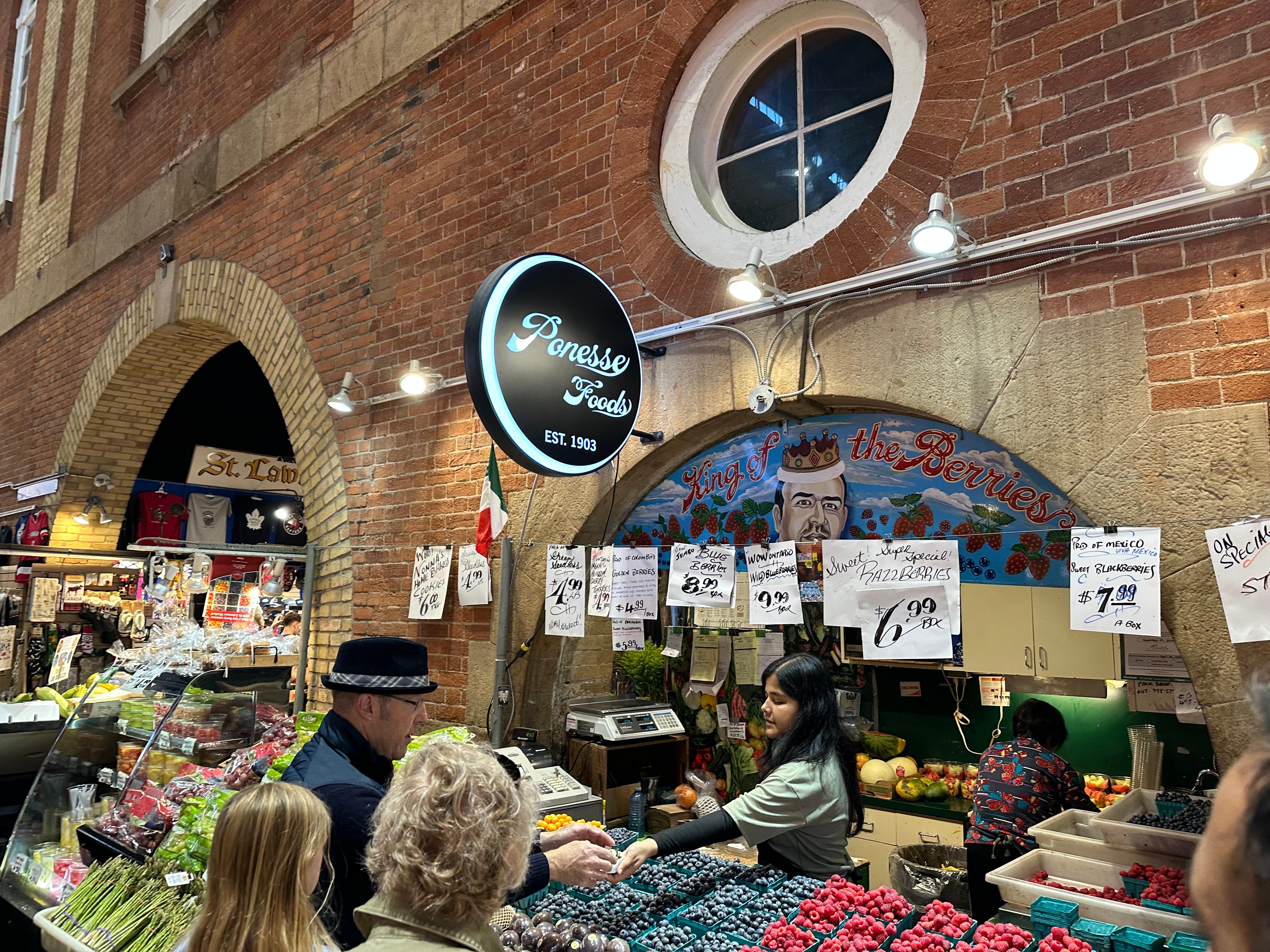
What my friend was feeling at the personal level is precisely what we’re feeling at the community and economic level. It’s why small business and farmers markets thrill us and why big-box makes us feel empty, soulless, and rushed. It’s why everything feels like tourism now - like it’s not built to be functional for the community first, but built to be functional for someone passing through on a cruise ship. An infinite facade of things that are made to look like something they aren’t, primarily so we can share them on social media.
What we work on and what we build matters because it leads to the creation of a dynamic small business environment and that’s one of the key features that makes a place livable. By default that means that entrepreneurship matters and thus the environment we create for the viability of as many people doing it as possible matters.
It matters at the personal level - owning something, loving the customer, and a level of craft that all but disappears at the big-box level. When you make something and become the steward of that thing - especially where there is a service component - you take care of it and making it good becomes a natural byproduct of that care. Your customers - like me - can feel it and begin to love it, and in some ways own it themselves.
It matters at the community level - a dynamic small business environment is actually what makes a place livable. This is underrated because we are in the era of hyper-mobility - an era that all but encourages you to leave your hometown lest you become a loser (although this trend seems to be reversing). That means that people have to actually want to live where they live and we take this for granted. It isn’t granted, and the result of the global move to the big city has ramifications we’ve overlooked - like it’s contribution to the population crisis.
It matters at the economic level - more people making stuff makes the quality go up and the price come down. This should be obvious, basic math even, but the point is lost on many - even those in publicly funded organizations. We can see the consequences now in G7 economies, like Canada.

It matters at the culture level - because what we do on a daily basis is who we are, who a place really is, and forges our cultural identity. If the only thing that matters is money, then fine, everything becomes about the sticker price of the thing and nothing down or upstream matters. If work is meant to be soulless so you can take 1 annual vacation and have 2 cars, then fine, we go work for big corporations and try to hide our true selves. If customer service doesn’t matter then you get cardboard-plate-eggs near the Atlanta airport instead of a cappuccino and homemade pastry from the local cafe on the outskirts of Milan.
How Start Great Work Wrapped
We’re so trapped in our fear of being ourselves, and of economic destitution, that we don’t know how to take the first step toward finding our work and doing it well.
“Begin by trying the simplest thing that could possibly work.” - Graham
Instead of making something complete, perfect, and sustainable, make the smallest functional thing you can that solves an obvious problem for somebody willing to pay for it. When you think it through, this is the entire difference between making something great over time, and never making anything. It has to be barely passable first to ever be great.
Ironically, it’s the young that often waste the most time here. They try like crazy - which is exactly what you should be doing - but it’s often at the extremes and so you leave one thing to go start the next (trust me, I know). As you age, your lack of time becomes more obvious and so you enter what I call No Life - meaning that you have to say no to everything that isn’t your work, in favour of the small number of things that actually are.
In our culture this is seen as limiting and so we develop a cultural obsession with youth that people like the Chinese and the Persians don’t understand. Ironically, while obsessed with youth - even in leadership roles for some reason - we’re having fewer and fewer babies every year. Riddle me that - the cultures that treat their old with the most reverence and respect also seem to have the most babies.
There are advantages to being young though, and so we should start to make our work as early as we can.
“The advantages of youth are energy, time, optimism, and freedom. The advantages of age are knowledge, efficiency, money, and power. With effort you can acquire some of the latter when young and keep some of the former when old.”
There seems to be a flippening-of-sorts happening here - the young jump full-on into adult professional life too early, without having the experiences necessary to gain perspective on life at the macro. This is a mistake not because a mostly-drunk-gap-year is a wise thing to do, but because you haven’t tested the extremes and you haven’t seen things that teach you your place in the world as one big system (which it is). Travel is often saved for the dream-state of retirement - a time that never comes - and so you find yourself either unable or unwilling to test the extremes that feel so natural as a naive young person.
Don’t worry so much about how to do something and focus more on just doing it. Often the young want the outcome right know and so they switch from project to project - again, living at the extremes - without having actually finished anything. Unfortunately, time is a central ingredient to making anything good, and the steps to get there aren’t skippable6.
“You can’t trick God. So stop looking for that kind of shortcut. The way to beat the system is to focus on problems and solutions that others have overlooked, not to skimp on the work itself.”
You have no choice but to make it good if it’s going to last, so make it as good as you can. The good news is there are those who have done the work before you that are willing and able to help you. Mentorship doesn’t have to be formal - but it is good if you can pull that off. Proximity is real and place matters. Scenius is real simply because of the compounding power of being around other humans that are like you and are good at making the things you’re making. Like the Eagle and Child for fiction writers, Silicon Valley for entrepreneurs, and Dagestan for wrestlers.
“If a lot of the best people in your field are collected in one place, it’s usually a good idea to visit for a while. It will increase your ambition, and also, by showing you that these people are human, increase your self-confidence.
Colleagues don’t just affect your work, though; they also effect you. So work with people you want to become like, because you will.
…:the degree to which great work happens in clusters suggests that one’s colleagues often make the difference between doing great work and not.”
If place and proximity isn’t possible, you can still go through a self-directed apprenticeship. I’ve come to call this the Rinella Formula - a framework that came to us via American writer and outdoorsmen Steven Rinella.
Stay healthy. Doing good work is hard. If you constantly sprint to the point of all out failure (which I’ve done before) you will constantly take 2 steps forward and 3 steps back. Compounding becomes all but impossible. Sprint - yes! But sprint and then rest. Burning the candle at both ends doesn’t work. It just doesn’t. You are confined to the limits of mortality - and you have to accept that and make peace with it. Staying healthy will keep you optimistic and excited, and those too are key ingredients in good work.
“Morale starts with your view of life. You’re more likely to do great work if you’re an optimist, and more likely to if you think of yourself as lucky than if you think of yourself as a victim.
Morale compounds via work: high morale helps you do good work, which increases your morale and helps you do even better work.”
This is why the true magic is in the choosing, and in the starting. Choose and then start - work the process over an extended period of time. Maintain morale by getting small wins, consistently. This will keep you healthy and prepared for the long road ahead. And it will be long - but it will be good long - because the reward for good work is more work. Simple things like long walks can make all the difference. Some of our greatest minds have been incessant walkers and this isn’t random.
Long walks help keep your heart healthy, your mind calm, and reinforces a curiosity about the world that you must maintain in doing any worthy pursuit. My biggest mistake is filling long walks in nature with noise. Podcasts are interesting, and we’re not used to silence anymore, so we find ourselves sacrificing the former for the latter out of some kind of fear that is hard to explain. Again, this is a young persons game and we ought to understand that silence in nature is the ultimate way to unlock the sublime.
What Robert Greene calls the sublime - his next book in fact - is a connection to what Phil Stutz calls the Life Force, and that force isn’t accessible to you in chaos, burnout, or noise. As fate would have it, the day I finished the first draft of this essay, I turned to the Daily Law of December 1st, and read the following.

Connection to the sublime will keep you endlessly curious, and this is the final component to doing great work, and staying on the bus you’re supposed to be on.
“Curiosity is the best guide. Your curiosity never lies, and it knows more than you do about what’s worth paying attention to."
Curiosity is the key to all four steps in doing great work: it will choose the field for you, get you to the frontier, cause you to notice the gaps in it, and drive you to explore them.
…The discoveries are out there, waiting to be made. Why not by you?”
All there is to do is start.
—
All we need is a point of view, a set of tools, and a lot of time.
See you on the road.

It isn’t AI. It’s birthrate and borders. The more I peel the onion the more fascinated I get, and I now see it in everything. More on that starting in January.
It’s probably worth saying too that if you’re feeling anxiety because a 20-something on a YouTube ad told you you’d be left behind forever if you don’t work on AI, ignore that person and ignore that feeling.
Surely we’re in for technological revolution, but we’re in the hype-cycle right now and there is simply nothing worse in this world than watching the lost desperation of the SaaS bro, turned crypto bro, turned AI bro. An endless loop of 20-somethings pretending they know anything about how the world really works, their place in it, and their relative importance. Reminding you that if you do not participate fully in this thing that you are hopelessly screwed and life itself will past you by and leave you in the dust, you loser.
I’m not being hard on these youngs (mostly men) as people - I’m simply saying that trying to clamber on to the current thing you’re being told is important is natural, but ultimately misguided. It ends with you being a replaceable cog in an unfathomably huge system that doesn’t know you, doesn’t care about you, and won’t take care of you when you feel like a failure because you don’t succeed in it.
The only reason I’m approaching 50 essays and 100,000 words on this newsletter project is because of my mornings at the cafe, and the sense of being a local.
Countries like Australia are getting wise to this crisis, and they’re taking the first responsible adult step to doing something about it.
Whatever way you slice it this really is a we problem. Corporations? Us. Governments? Us. Social media? Us. There is no-one else to blame, and there is no-one else coming to save us. We’re on our own and we best start dealing with it together.
An underrated element here is that seeing yourself on the screen talking to someone else is totally unnatural and likely gives us a level of mental disorientation that we haven’t realized yet. Turn off the self-view on all of your platforms by default and you will start to feel more at ease on virtual calls. The kids call these pro tips - and you’re welcome.
This is another thing that ancient cultures, like the Chinese, understand and the end result of that is highly capable people.