


For a long time I’ve tried to square how different modern life is from our natural state. You can only compare two extremes if you’ve experienced them both, and I have. East Africa - the land before time - where you can see stars, mega-fauna, and infinite space. New York City where the incessant noise and human proximity is somehow both thrilling and exhausting. Summers spent running ramshackle in Australia and South America, and also desk worker, eyes straining to operate out of a small LED screen.


I suppose this is simply the dichotomy of modern life, and so there’s nothing to be done but get on with it and do the best we can with what we have. Living in reality - the world as it actually is, and not as we wish it was. Even now I can feel myself straining against the click-clack of the keyboard, trying to remember to breathe into my belly and not succumb to the dreaded email apnea.
On some days it is rather pleasant to be tucked away at home during a January storm, hot espresso, and a nice writing desk to work from. On others, the body and mind are screaming for something real and physical. We all have a different relationship with our mind-body, and for some that connection is so strong that there is no mental without the physical. Again - a dichotomy: if you know what it is to be sick, and you also know what it is to feel amazing, then there ought to be a process to avoid the former and stay in the latter.
For me that process is seasonal living, as much as possible. That is far easier said than done because modern life - especially work life - is structured to be anything but rhythmic. We are inundated with constant notifications, calories, blue-lit screens, and a furious fuss about productivity. When we hit a winter low we wonder what’s wrong with us?
The answer, ultimately, is nothing is wrong with us. This is a perfectly rational and predictable response to our current situation, which is never ending doing-ness.
Seasonal living is possible though - and doing it hinges on 3 key questions that fascinate me more and more as I study their implications:
Who are you?
Where are you?
When are you?
Who are you - your natural history - determines your energy and sunlight requirements. Where are you determines what your light environment is and thus what food is available. And when are you determines your light and temperature environment. These are the key ingredients of the wellness soup, and we’re only now remembering this1.
For me - I’m a Caucasian Northerner, with firm roots in Northern Europe. I live in Canada, at the 45th parallel North, and it’s winter time. From a light perspective that means there is little of it, and so I need to maximize getting as much as I can - especially in the morning as the sun rises. It means that UVB (the vitamin D machine) only just came back, and it means I need to wear my blue blockers at night to get a good, long sleep. From a food perspective it means my seasonal pattern right now is high fat, high protein, low carb, because that is what is on offer naturally2. And it means I have to pace myself and hydrate - not pretending like it’s mid-summer. Right now we’re not making hay while the sun shines, we’re storing calories and resources for the spring.
Living in this way, as much as possible, reveals something remarkable - that all of the tools we need to thrive, in any conditions on earth, are readily available to us, at every moment. That we are perfectly attuned to our environment, whether it’s mid-July in Spain, or mid-winter in Eastern Canada, if only we allow ourselves to live in the present (literally). We forget this, but only because we are constantly indoors, under artificial light, seated at 90 degrees.
Returning as best we can to natural rhythms, we remember that we are built perfectly for our environment - crafted by nature - and nature doesn’t make mistakes.
There are few places on earth where I’ve experienced this reality more acutely than the fringes of the Amazon jungle.
“…human animals thrive in the wild.” - Christopher McDougall
Natural Born Heroes at the Foot of God
We travelled to the North-Eastern tip of the Yucatan Peninsula this year to spend some time in the Mexican sun, and the Caribbean Sea. Even a cursory look back into our early human origins reveals to us that Sun x Ocean = Life.

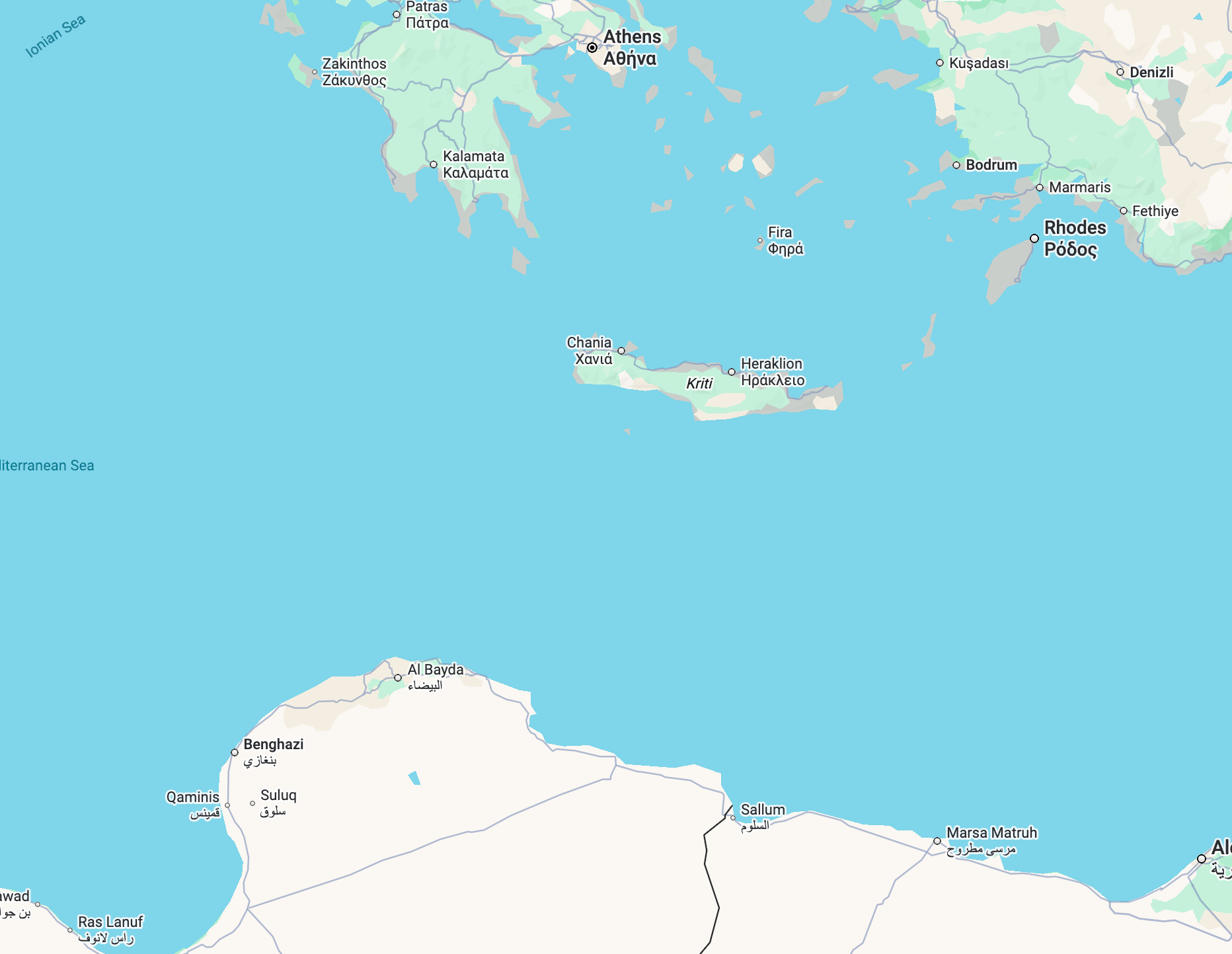
I brought a paperback of Natural Born Heroes with me, and I have since read it twice. That happens to me at times, as I imagine it does to you. You feel as if there is more juice to squeeze and so when you finish the book, you simply start again and more of the puzzle pieces fall into place. It could be because it landed personally for me - much of the story takes place on the southernmost Greek island of Crete, a small part of my first international experience at 18 years old3.
Writer Chris McDougall opens the Preface with an introduction - a reintroduction to many - of Kelly Starrett, a famous American physiotherapist and movement specialist who spent his formative years in the Bavarian Alps, while his mother was on teaching assignment in Germany. Kelly quickly realized that his altitude-oriented German neighbours seemed to be highly attuned to their environment, simply because they were in it all the time.
He tagged along with German neighbours who, as a family, trekked into the Alps on weekends to ski and kayak and rock climb. In Bavaria, everyone does everything…
These were formative years indeed, because Kelly went on to dedicate his life to exploring the limits of what’s possible for humans. A limit that, he soon discovered, stretches far beyond what we moderns believe is possible. He kept, and still keeps, what he calls his Leopard List - an homage to what’s possible when humans are in their natural state.
Like the jungle cats, we’re good at just about everything. We can swim when we want to, climb when we have to, run as far as we need to, and fight when we’re cornered. We’re not the biggest or the strongest, but we’re adaptable and super skillful…
Starrett is quick to remind us that these are abilities we all have, today as you read this newsletter, but that we’ve forgotten these unique abilities that are equal parts ‘…universal, empowering, and enduring.’ Universal, because we are all ‘natural born heroes’ - we each carry this potential as our birthright. Empowering because being capable in our environment is what gives us the confidence to face reality and do our life’s work. And enduring because the body can be in the natural state for many more years than we are led to believe in a you’re-done-at-65 culture4.
Climbing and grappling are both excellent examples. In climbing, even the best of the best believe that you could, in principle, do some of your best work on the wall or rock late into what you would likely consider your peak athletic years - like Alex Honnold describing the work of his mentor Peter Croft. And in grappling arts like jiu-jitsu, the sport that we know and love today was created by a man who was physically weak, and so the physics of leverage and timing were folded into the essentials of the sport.
If you learn to move fluidly, you’ll find a state of ‘effortless effort'.’ You’ll exert power without creating any physical impingements. You can do that your entire life without getting injured.
And even if you do get injured in your natural pursuits, the body is a healing machine - natural mechanisms that kick in instantly when you start any kind of fasting, light, or recovery protocol, like sauna. Healing in the modern world then, is much more allowing, as opposed to trying5. This is much easier said than done, because as well-meaning as we are, modern life is a furious rush toward infinite productivity, and that’s naturally stressful. It takes a strong stomach to slow down, get off the ride (even temporarily), and choose a new way.
The Great Remembering, as I’ve come to call it, is that new way and it is very much alive and well if you know where to look. The remembering of the simple fact that ordinary humans are extraordinary. It’s easy to find in the eclectic local and internet-based communities of fringe radicals, but that pales in comparison to going to the source. Nowhere is the source more obvious, and available, than in places where the humans haven’t forgot, because they never left.

Yes, it may be a Great Remembering for moderns, but for those who have never left Eden it is simply the waters in which they swim. It’s as normal to them as your tech-neck is to you. This is not a judgement one way or the other, it simply is what it is. We are raised in our culture, as if in a petri dish, and it takes a heroic dose of something strong to buck the trend and shake some of that modernity off you.
Paul Rosalie is someone who bucked the trend - having dedicated his life to restoring and preserving the Amazon Rainforest. He recently appeared for his third tour around the Lex Fridman podcast, and it included never-before-seen footage of un-contacted cultures in the Peruvian Amazon6. My own experience of traditional peoples of the Amazon was far more cursory than Paul and his team being embedded in the jungle permanently, but it was incredible none the less, and it was one of my first and only experiences with those who haven’t forgot.
I was spending the summer months working in Ecuador - in the bustling town of Guayaquil7 - and my travel partner was quick to accept an offer to join me there. We rambled about - the very basis of our relationship - and soon found ourselves at the door step of one of Earth’s most amazing features - the Amazon Rainforest.


Standing at the foot of the Amazon is a feeling of bigness that is hard to describe. It feels somehow, in my overly romantic brain, as a one-way-door, and perhaps it is. It’s somehow unnervingly real to someone who grew up in a region as parochial and quiet as I did. It’s as if God itself can’t help you here. As if you’re too far gone. That you’re about to make a choice and that choice is like the one Caesar made when crossing the Rubicon. There is no coming back.
You will physically return (ideally) but you will be changed somehow because you’ve traveled through time8. To a world that is quiet, dangerous, awe inspiring, and somehow more real than you can imagine a place being. It’s base level reality where all that matters is the laws of physics and human relationships. That’s how I felt. Romanticism tends to serve hindsight well and I understand that as the years pass I will likely have sensationalized the feeling, but I felt it all the same, and still feel it now.
Somehow the first steps felt easy because they were with someone who made me feel invincible. We humans can do anything in groups, and we can do nothing alone.
We were welcomed in by an extended family group still living as traditionally as they could in their ancestral homeland in the jungle. For all of our modern developments and technological prowess back home, the first thing we noticed was an incredible sense of health and vitality. These people had capacity oozing from their pores - fully tuned in to where and when they were, living within the environment, believing and knowing that we are of nature and we are at our best when we’re in it. The natural born heroes of Chris McDougall’s imagination are in all four corners of the earth, to this day, living as the full embodiment of our species.
I don’t want to romanticize this way of life - Paul Rosolie gives the same warning in the Lex podcast. Everything is different here. Morality is different. How they see the world is different. How they see you is different. The agreements we make between groups of people - quite literally how we build culture - is entirely different in this context and you ought to have the sensibility of place to tread lightly in this new world. If you’ve grown up among islanders, you’ll understand this, and what is a jungle if not a land-locked island?
Into an environment like this - one that is not our own - we bring to it what I have come to call the first rule of culture: that other people are not failed attempts at being you. This comes to us from Canadian anthropologist (and National Treasure) Wade Davis. Chris Arnade and Wade would likely disagree about the idea of cultural relativism, but this is an exceptional rule for travel and for human relationships in general.

The children took us by the hand and were quick to show us the magic of their home with an unbridled passion and energy that is all but gone in the ‘West.’ Energy here is the bridge from the physical to the spiritual - one of Huberman’s truly excellent ideas - that energy and identity form the basis of who we are and what we are.
The children, in their native environment, having never left Eden and never lost contact with the Bigness - or what Stutz calls the Field - is what literally and figuratively gives them the energy to express themselves to the full extent of their humanity. Physically grounded to the earth on one hand, and spiritually connected to the earth for every material and emotional need, on the other. This is something that we in the technologically advanced societies can never hope to replicate and it is making us sicker and sicker.
When I returned I kept telling one particularly exceptional (and truly terrifying) story. It is, as I now believe all things are, a story of light. The young wanted nothing more than to take us out and about on foot, to show us everything there was to see in their home. Naturally, that meant parades at night through the jungle to discover interesting things. For Robin and I that meant headlamps, and for the children of the jungle, it most certainly did not.
My first inclination was that they are simply used to the dark in a way that our eyeballs have been trained out of, and so they probably had something like a 20% sight advantage. I couldn’t have been more wrong. These children could literally see in the dark. This is where the story starts to feel like hyperbole to those who would receive it back home - but I’m not exaggerating in the least.
To prove their point, they would playfully ask to see our headlamps, immediately turn them on and take off into the forest at a full sprint, leaving us helpless, all the while howling with laughter. Whatever it is they can actually see - shadows, reflections, the eyes of animals, or insects - I will never know because I’ve lost that human capacity, but it was remarkable and I think about it to this day.
So what do these children have that we do not? Rounding up from a Paul Kingsnorth idea - they have direct access to people, place, purpose, and prayer. Constant contact with each other, free from distraction, allowing them to work together, build bonds, and make agreements. Direct contact with place - at all times - from being physically grounded on the earth barefoot to hunting for game in the jungle. The freedom from wondering how to spend their time - an absurd state of affairs only felt by the industrial rich. And a form of prayer in movement that is a direct connection to their home and their creation myths.

The combination of all of these things - put into action daily - is what gives them the physical, mental, and spiritual skills needed to thrive in their home. Sensory attunement to all that is around them gives them seemingly superhuman abilities to folks like me - like seeing things I can’t see even after they pointed them out, or hearing subtleties in the cacophony of the jungle that literally give them a mental image of what is around them at all times.
Even though life is a high stakes game in this environment (perhaps life always is we just can’t see it because of our comfort) there is very little trying to acquire these skills. There isn’t a spreadsheet, a to-do list, or a weekly plan that includes 30-60-90 day stretch goals. There is only the plan that nature has laid out for them, and success in that environment means accepting that plan, that you are not in control of it, that you didn’t design it, and that you don’t know the outcome.
Life is an allowing and an accepting that the technologically advanced will never feel because we’ve severed our connections with the source code, in favour of computer code.
Make contact with reality today. You’ll love it there.
I’m going to use the next piece to prove to you that I don’t believe we should romanticize or idolize this way of life, and actually much of modern life is good.
I do think we are sick, and getting sicker, but we have also created things together, as big groups, that are amazing. Some even unfathomable. The fact that New York City works at all feels like some kind of miracle and it’s important to recognize that. That’s next, on People & Place.
All we need is a point of view, a set of tools, and a lot of time.
See you on the road.

This particular word - remembering - will be central to the next series of posts.
Eating what is on offer naturally tunes you to the environment you’re currently in. Think of light as the barcode imprinted on food, and when you eat that food, your body reads the barcode to know when and where you are in the world, and how it should be in response.
On it’s southern reaches you can almost talk yourself into being able to see Libya. I’m sure you can’t, but I liked to think that I could.
We leave so many good years on the table. We obsess over lifespan - trying to become Gods by overcoming death - but perhaps we ought to focus on maximizing healthspan. Humans are capable of almost anything.
There are no better examples than fasting and light, and what we’re now learning about the bodies ability to regenerate and heal is awe-inspiring.
Fascinatingly - it was the tribe that made contact with them. Perhaps because the Junglekeepers were in their ancestral home and so it makes sense for the natives to check them out. Or they were in need of resources and this was as much a raid as it was exploration. As we later found out in the podcast - the latter is likely more true. Survival is survival.
For whatever reason I don’t have overly fond memories of Guayaquil itself even though I did meet some wonderful people. I think I was in a funk of some kind and I needed the more extreme regions of Ecuador to satisfy whatever itch I had about the place. That’s likely why I sent out the bat-signal to Robin and I’m glad he said yes - as he so often does to life. Nonetheless, looking back, Guayaquil is a beautiful city.

This is exactly the feeling that a place like South-East Zambia gives and I believe it is an essential experience for anyone who was raised in the delusional comfort of middle-class North America.